
7 Reasons Tallow Can Cause Skin Flare-Ups
Last Updated: October 27, 2026
Quick Summary
Yes, tallow can cause tallow flare-ups, especially if the balm contains fragrance, essential oils, or botanical extracts, or if your skin simply does not tolerate it. Watch for redness, itching, stinging, swelling, or new bumps, and patch test on the inner forearm for five days before full-face use.
- A "clean" label does not mean hypoallergenic, so check balms for fragrance, essential oils, and botanical extracts.
- Patch test a pea-sized amount on the inner forearm and leave it uncovered for at least 4 hours.
- Keep checking the test spot daily through Day 5 to catch reactions that appear 72 to 96 hours later.
- Stop using the product immediately and simplify your routine for at least three to five days.
- Seek medical care promptly for facial swelling, spreading hives, or any trouble breathing.
Table of Contents
- Why Tallow Can Trigger a Skin Reaction
- Is Tallow for Sensitive Skin Actually Safe?
- Beef Tallow Skin Purging vs. a True Reaction
- Can Beef Tallow Cause Acne and Clogged Pores?
- How to Patch Test Tallow Balm Before Full Use
- Irritation, Allergy, Acne, or a Condition Flare: Telling Them Apart
- What to Do When Your Skin Reacts to Tallow
- Choosing a Tallow Balm for Reactive Skin
- Frequently Asked Questions
Why Tallow Can Trigger a Skin Reaction
Can tallow cause tallow flare-ups? Yes, it can. At Palm Beach Tallow, we make grass-fed tallow balms, and we would rather you understand the risk than be surprised by it.
Here is the part most guides skip.
What Is in Tallow That Could Irritate Skin
Then there are the add-ins. Many tallow balms carry fragrance, essential oils, or botanical extracts.
Watch out: a "clean" label does not mean hypoallergenic.
Is Tallow for Sensitive Skin Actually Safe?
The catch is individual tolerance. Skin sensitivity varies enormously, and a balm that soothes one person can irritate the next. For a deeper look at tallow as a sensitive-skin alternative, read our full article. Patch testing is the only honest way to know which camp you are in.
Sensitive or Reactive Skin: What to Watch For
Reactive skin tends to announce itself quickly. Keep an eye out for:
- Redness that appears within minutes to hours of application
- Itching, stinging, or a warm, burning sensation
- Swelling or tightness around the application site
- Small bumps or a rash that was not there before
- Flaking or peeling after a few days of use
If you recognize your own skin in that list, treat any new product with caution. For a broader look at building a gentle routine, see our guide to natural skincare for sensitive reactive skin.
Beef Tallow Skin Purging vs. a True Reaction
Here is the practical test: stop using the balm for a week. If things calm down and stay calm, you were likely reacting. If the bumps return the moment you restart, that is your answer.
Can Beef Tallow Cause Acne and Clogged Pores?
Can beef tallow cause acne?
If breakouts are your main worry, choose a balm formulated with acne-prone skin in mind and apply it sparingly. Our breakdown of the best tallow balm for acne-prone skin covers what to look for on the label.
How to Patch Test Tallow Balm Before Full Use
Most guides tell you to patch test and stop there. That advice is useless without a schedule, a test location that actually predicts facial tolerance, and a plan for delayed reactions. Here is the version that tells you something.
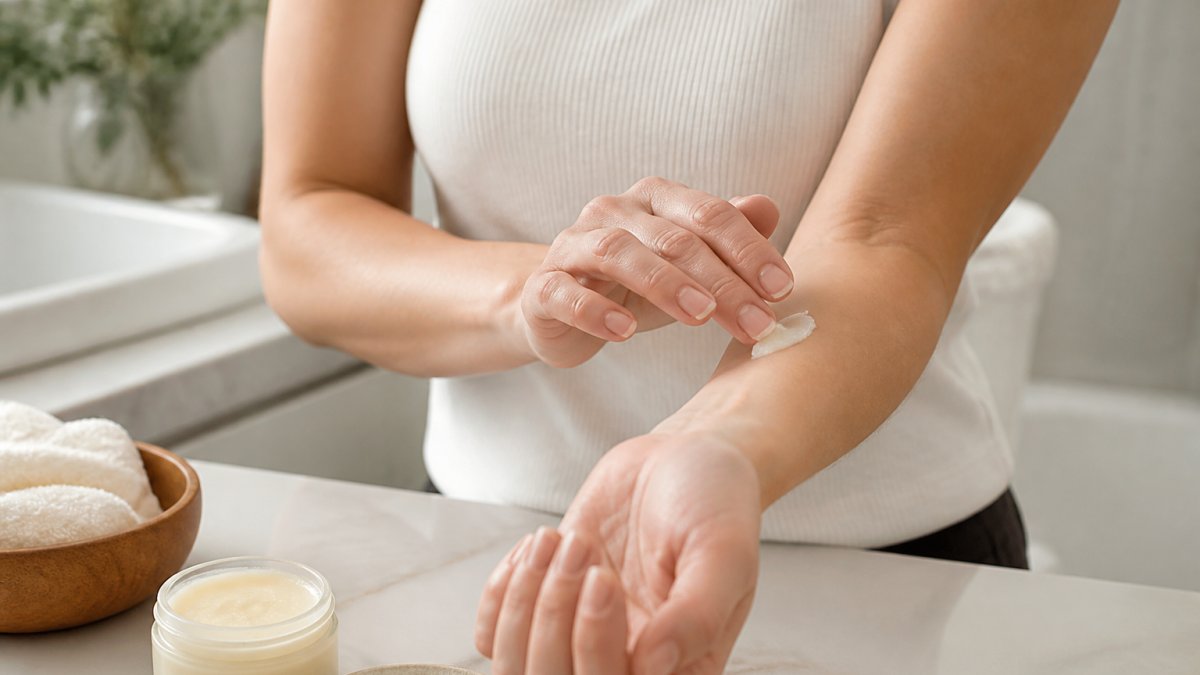
Where to Test and Why
The inner forearm is the standard site because the skin is thin, relatively protected, and easy to observe. But forearm skin is not facial skin. A common pattern is to run a two-stage test: forearm first, then a small spot near the jawline or behind the ear, which sits closer to the sebaceous density and thinness of the face.
A Specific Patch-Test Schedule
- Day 0, morning: Wash and dry the inner forearm. Apply a pea-sized amount of balm to a quarter-sized area. Leave it uncovered and do not wash it off for at least 4 hours.
- Day 0, evening: Check for redness, itching, stinging, or swelling. Note anything, even mild.
- Day 1 (24 hours): Recheck the same spot. Immediate irritation usually shows by now.
- Day 2 (48 hours): Recheck again. This catches most delayed contact reactions.
- Day 3 to Day 5: Keep checking daily. Some allergic reactions, particularly to fragrance or essential oils, can first appear 72 to 96 hours after application.
- If clear at Day 5: Repeat the same schedule on a small spot near the jawline before moving to full-face use.
Reading Delayed Reactions
A reaction that appears within minutes is usually irritation or a fast allergic response. A reaction that appears two to four days later is more likely a delayed hypersensitivity reaction, which is common with fragrance components and some botanical extracts. Delayed reactions are the reason a 24-hour test alone is not enough, and why a five-day observation window is the honest minimum.
Grass-Fed Tallow Balm for Dry Skin →
When a Patch Test Is Not Enough
A clear patch test lowers risk but does not eliminate it. Cumulative exposure, application amount, and the state of your skin barrier all change tolerance. If you have a known fragrance allergy, eczema, or a history of contact dermatitis, treat the patch test as one data point and introduce the balm on a small area for a week before wider use. Once you are clear, our guide on how to use tallow balm in a simple skincare routine walks you through introducing it gradually.
Irritation, Allergy, Acne, or a Condition Flare: Telling Them Apart
| Problem | Typical Onset | Key Signs | What to Do |
|---|---|---|---|
| Irritation | Minutes to days | Stinging, redness, dryness | Stop use, simplify routine |
| Allergic reaction | Minutes to hours | Itching, swelling, hives | Stop use, seek medical advice |
| Acne or congestion | One to four weeks | Clogged pores, blackheads, bumps | Reduce amount, spot test |
| Condition flare | Hours to days | Widespread redness, scaling, itching | Stop use, consult a doctor |
What to Do When Your Skin Reacts to Tallow
Stop using the product. That is step one, and it is not negotiable. What follows is where most guides get vague, so here is a staged response you can actually follow.
Step 1: Remove the Residue Gently
Occlusive balms sit on top of the skin and can keep irritants in contact longer. Remove residue with lukewarm water and a mild, fragrance-free cleanser. Avoid hot water, washcloths, scrubbing, and oil cleansers that may spread the product. Pat dry rather than rub.
Step 2: Simplify for Several Days
Drop actives, exfoliants, retinoids, acids, and anything fragranced for at least three to five days. Use a plain moisturizer you already trust and a gentle cleanser. The goal is to remove variables so you can tell whether the reaction is settling.
Step 3: Document What Happened
Note the date, the product and batch if visible, how much you applied, where, and your symptoms. Photograph the area daily. This record is what a dermatologist will ask for, and it helps you spot patterns if you react again.
Step 4: Triage by Symptom
For localized redness, itching, or small bumps, monitor for 48 to 72 hours. If the reaction is improving, continue the simplified routine until skin is calm. If it is unchanged or worsening, contact a clinician.
Step 5: Decide Whether to Retry
The American Academy of Dermatology recommends stopping any product that causes a reaction and patch testing new products before regular use. For persistent or spreading symptoms, the National Eczema Association offers guidance on managing flares and when to seek professional care.
What Not to Do
Do not apply hydrocortisone or other medicated creams without guidance, do not layer more occlusive balm over a reacting area, and do not assume a reaction means every tallow product will fail. Formulation differs, and a reaction to one jar does not automatically rule out a plainer formula.
Choosing a Tallow Balm for Reactive Skin
Our grass-fed tallow balm for dry skin uses four simple ingredients: grass-fed and finished beef tallow, organic olive oil, beeswax, and organic sweet orange essential oil.

If you want a lighter texture for larger areas, our Whipped Tallow Balm adds organic castor oil for a silky finish.
Frequently Asked Questions
Can beef tallow make you itchy?
Yes, in some people. Itching after applying tallow usually points to irritation or a mild allergic reaction rather than the fat itself being inherently itch-inducing. Fragrance, essential oils, or other added ingredients in a tallow balm are common culprits. If itching starts within minutes to hours of application, wash the area with cool water and a gentle cleanser, stop using the product, and watch for redness or swelling. Persistent or spreading itch warrants a call to a dermatologist.
How can you tell if your skin is reacting to tallow?
Track symptom onset and location. A reaction typically appears where you applied the product, often within minutes to 48 hours, and may include redness, itching, stinging, or swelling. Acne-like bumps that appear gradually over weeks in areas prone to clogged pores suggest pore congestion rather than an allergy. If you suspect tallow flare-ups, stop use and note whether symptoms fade within a week. A dermatologist can help distinguish contact dermatitis from an underlying condition flare.
Is tallow safe for sensitive skin?
Many people with sensitive skin tolerate tallow well because it is rich in fatty acids like oleic, stearic, and palmitic acid that support the skin barrier. However, sensitive or reactive skin can still react to added fragrance or essential oils. Choose a balm with a short ingredient list, patch test on your inner forearm for 24 to 48 hours, and introduce it slowly. Stop use if irritation, redness, or itching develops.
What should you do if tallow irritates your skin?
Stop applying the product immediately and rinse the area with lukewarm water. Avoid scrubbing or adding other new products. Apply a plain, fragrance-free moisturizer if your skin feels dry, and monitor for improvement over 3 to 7 days. If redness, swelling, or itching worsens or spreads, see a dermatologist. Before trying tallow again, patch test a small area and consider a formula without essential oils or fragrance.
Skin reactions are frustrating, especially when you have already tried a shelf full of "natural" products that let you down. We built Palm Beach Tallow around simple, recognizable ingredients and small-batch care, so you always know what you are putting on your family's skin. Our tallow balms use grass-fed and finished beef tallow rich in vitamins A, D, E, and K, and every batch is made by hand. Get started with Palm Beach Tallow and give your skin a balm you can patch test with confidence.
