
Natural Skincare for Sensitive Reactive Skin: A 2026 Guide
Table of Contents
- Why Your Skin Is Reactive (And What That Actually Means)
- Natural Ingredients for Sensitive Skin That Calm and Repair
- Ingredients to Avoid When You Have Sensitive Reactive Skin
- How to Calm Reactive Skin With a Simple Daily Routine
- Tallow Skincare Benefits for Sensitive Skin: Why It Works
- Patch Testing: Your First Line of Defense
- The Real Cost of Cheap Moisturizers vs. Clean Formulas
- Final Thoughts on Natural Skincare for Sensitive Reactive Skin
- Frequently Asked Questions
Last Updated: September 9, 2026
Why Your Skin Is Reactive (And What That Actually Means)
Sensitive reactive skin is a condition where the skin barrier is compromised, allowing irritants to penetrate more easily and triggering inflammation, redness, and discomfort (peer-reviewed research). When the lipid barrier weakens, moisture escapes through transepidermal water loss while environmental aggressors slip in, leaving skin easily sensitized. Many people assume they have a chronic condition like rosacea or atopic dermatitis when they actually have a damaged barrier that can be repaired with the right care.
The distinction matters because treating reactive skin as a permanent condition rather than a fixable barrier issue leads people down the wrong path with harsh treatments. The skin barrier is your first line of defense, and when it's compromised, even gentle ingredients can trigger irritation.
What most guides get wrong is focusing on what to apply without addressing why the barrier broke down in the first place. The skin barrier is a complex layer of lipids, ceramides, and fatty acids that holds moisture in and keeps irritants out. When this barrier is intact, skin looks calm and hydrated. When it's compromised, everything changes.
Natural Ingredients for Sensitive Skin That Calm and Repair
The most effective natural ingredients for sensitive skin are those that closely mimic the skin's own composition and support barrier repair rather than simply coating the surface. Ceramides, fatty acids, and fat-soluble vitamins are the building blocks your skin barrier needs to rebuild itself. Botanical extracts like chamomile and calendula offer soothing and calming properties, but they cannot replace the structural lipids your barrier is missing.
Tallow is the standout ingredient here because its fatty acid profile closely mirrors human sebum. This means it absorbs deeply without clogging pores, delivering vitamins A, D, E, and K directly where the skin needs them. For how to calm reactive skin, ingredients that support the lipid barrier matter more than anything else, because a repaired barrier stops reacting at the source rather than just masking symptoms.
For natural skincare for sensitive reactive skin, look for formulas that are fragrance-free or use only minimal organic essential oils, pH-balanced to match skin's natural acidity, and rich in barrier-supporting fats. Hypoallergenic and non-comedogenic claims help, but the ingredient list tells the real story. If you cannot pronounce most of the ingredients, your skin probably cannot process them either.
Ingredients to Avoid When You Have Sensitive Reactive Skin
Synthetic fragrances, essential oils in high concentrations, alcohol, sulfates, and harsh preservatives are the most common culprits that trigger reactions in sensitized skin. Fragrance is the single biggest offender, hiding in products labeled "unscented" through masking agents. Many natural skincare lines make the mistake of loading formulas with essential oils that, while plant-derived, are potent irritants for reactive skin.
Alcohol appears in countless moisturizers as a quick-drying agent, but it strips the lipid barrier and increases transepidermal water loss. Sulfates create that foamy lather people associate with cleanliness, yet they disrupt the skin's acid mantle and microbiome. Preservatives like parabens and methylisothiazolinone are common contact allergens.
The challenge with natural skincare for sensitive reactive skin is that "natural" does not automatically mean non-irritating. Poison ivy is natural. The key is ingredient sourcing and concentration, not marketing labels. Dermatologist-tested claims also deserve scrutiny, since testing protocols vary widely and a product can be dermatologist-tested yet still contain known irritants.
How to Calm Reactive Skin With a Simple Daily Routine
A minimalist routine with gentle cleansing, barrier repair, and consistent moisturizing is the most effective way to calm reactive skin. Strip away the toners, serums, and exfoliants while your barrier heals. Reactive skin needs fewer products, not more.
Morning routine: Rinse with lukewarm water only, or use a gentle non-foaming cleanser if needed. Apply a thin layer of moisturizer while skin is still damp to lock in hydration. Finish with a mineral sunscreen, since unprotected sun exposure worsens barrier damage.
Evening routine: Cleanse gently to remove sunscreen and buildup. Apply a slightly thicker layer of moisturizer to support overnight repair. Resist the urge to add active ingredients until skin calms down.
The full repair process requires consistent gentle care. During this time, avoid introducing new products, skip physical scrubs and chemical exfoliants, and protect skin from temperature extremes. Seasonal transitions often trigger flare-ups, so reduce product complexity when moving between humid and dry conditions.
Tallow Skincare Benefits for Sensitive Skin: Why It Works
Tallow skincare benefits for sensitive skin come down to biochemistry: tallow's fatty acid composition closely matches human skin oils, allowing it to repair the lipid barrier more effectively than plant oils alone. Grass-fed beef tallow is rich in vitamins A, D, E, and K, nutrients that support skin cell regeneration and reduce inflammation. This is why tallow has been used for centuries as a healing balm, long before commercial moisturizers existed.
The science behind tallow is straightforward. Human sebum contains roughly equal parts saturated and unsaturated fatty acids, and tallow mirrors this ratio. Plant oils like olive or coconut oil are primarily unsaturated, which means they sit on top of the skin rather than integrating into the barrier. Tallow integrates, delivering both immediate relief and long-term barrier repair.
Tallow Balm: Deep Barrier Repair
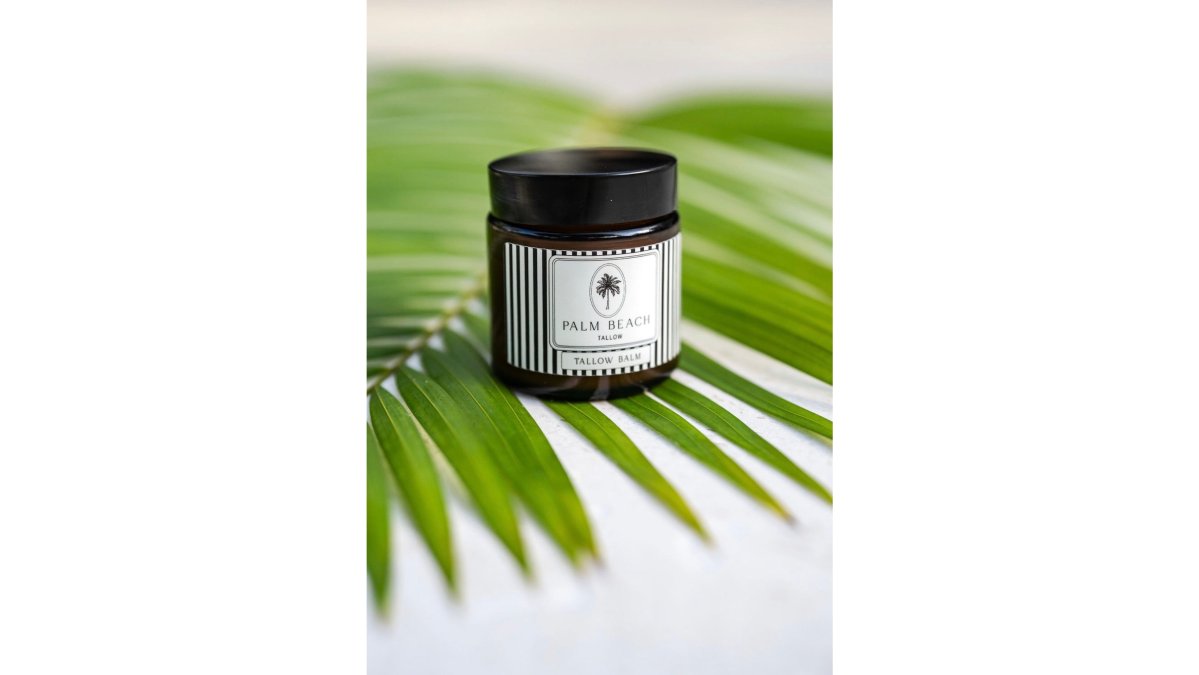
For severely reactive or damaged skin, a rich tallow balm provides the deepest barrier repair. Our Tallow Balm at $34.00 combines grass-fed and finished beef tallow with organic olive oil, beeswax, and a few drops of organic essential oil. The beeswax creates a breathable protective barrier that seals in hydration while the tallow delivers vitamins deep into the skin. This formula suits dry, dehydrated skin, eczema and rashes, rough patches, and sun-exposed skin, and it is gentle enough for babies and newborns.
Whipped Tallow Balm: Lighter Daily Hydration
For daily full-body use or warmer months, a whipped tallow balm offers the same barrier repair in a lighter texture. Our Whipped Tallow Balm at $38.00 is hand-whipped into a silky body butter that applies like lotion while delivering deep nourishment. It includes ozonated olive oil and castor oil, plus frankincense, lemongrass, and sweet orange essential oils. The lighter texture makes it ideal for face and body hydration without any greasy residue.
| Product | Price | Texture | Best For | Key Ingredients |
|---|---|---|---|---|
| Tallow Balm | $34.00 | Rich, thick balm | Deep barrier repair, eczema, severe dryness | Tallow, olive oil, beeswax |
| Whipped Tallow Balm | $38.00 | Light, silky butter | Daily hydration, face and body | Tallow, castor oil, ozonated olive oil |
| Tallow Sunscreen | $34.00 | Balm with SPF | Daily sun protection on reactive skin | Tallow, non-nano zinc, coconut oil |
Patch Testing: Your First Line of Defense
Patch testing is the single most reliable way to determine whether a new product will trigger your reactive skin before you commit to full-face application. The process takes less than a week and can save you from a painful flare-up that sets back your barrier repair by weeks.

How to patch test properly:
- Apply a small amount of product to a discreet area, such as the inside of your forearm or behind your ear
- Leave it in place for 24 to 48 hours without washing the area
- Watch for any redness, itching, burning, or bumps during that window
- If no reaction occurs, apply the product to a small area of your face, like one cheek, for another 48 hours
- If still clear, introduce the product into your routine gradually
For those with a history of severe reactions, consider testing for a full week and introducing only one new product at a time. This way, if a reaction occurs, you know exactly which product caused it. The same logic applies to children with sensitive skin, whose reactions can be more pronounced.
The Real Cost of Cheap Moisturizers vs. Clean Formulas
A $5 drugstore moisturizer costs more than its price tag suggests when it triggers flare-ups, requires additional products to manage reactions, and ultimately fails to repair the barrier. Cheap moisturizers rely on synthetic fragrances, mineral oils, and preservatives to keep costs low, ingredients that offer no barrier repair and often cause irritation. Many people with reactive skin spend more over time cycling through cheap products than they would investing in a clean formula that works.
The comparison shifts when you look at cost per use. A rich tallow balm requires only a small amount per application, and a single jar lasts several months. Compare that to a cheap lotion that requires heavy application, offers no lasting hydration, and may sit unused in your cabinet after triggering a reaction.

National Eczema Association guidance on moisturizer ingredients emphasizes that the most effective moisturizers for sensitive skin are those that restore the skin barrier, which is precisely what tallow-based formulas do through their fatty acid profile and vitamin content.
For families managing conditions like eczema or psoriasis, the calculation includes more than money. A product that calms skin and supports barrier repair reduces doctor visits, prescription costs, and the psychological toll of chronic skin reactivity.
Final Thoughts on Natural Skincare for Sensitive Reactive Skin
Natural skincare for sensitive reactive skin is not about chasing every botanical trend or loading up on more products. It is about understanding the skin barrier, removing irritants, and choosing ingredients that work with your skin's biology rather than against it. The most effective approach combines ingredient education, consistent gentle routines, and formulas built on fats and vitamins your skin recognizes.
The research on skin barrier function continues to evolve, with dermatological studies on skin barrier repair confirming that lipid-based moisturizers play a central role in managing reactive skin conditions. As more consumers move away from synthetic formulations, the evidence supporting traditional ingredients like tallow grows stronger.
For those ready to make the switch, Palm Beach Tallow offers hand-crafted formulas made with grass-fed and finished tallow, organic olive oil, and beeswax, rich in vitamins A, D, E, and K. Every product is safe for all ages, from newborns to adults managing chronic conditions, and free from synthetic preservatives, fragrances, and fillers. Our Tallow Balm delivers deep barrier repair while the Whipped Tallow Balm provides lighter daily hydration, and the Tallow Sunscreen offers reef-friendly protection with non-nano zinc oxide.

Finding natural skincare for sensitive reactive skin that actually works requires patience, ingredient literacy, and a willingness to question what the beauty industry tells you. Most commercial moisturizers treat symptoms rather than repairing the underlying barrier damage, which is why so many people with reactive skin never find lasting relief. Palm Beach Tallow builds formulas around grass-fed tallow, beeswax, and organic olive oil, ingredients that support skin cell regeneration, soothe dryness, and calm irritation without synthetic additives. Our products are hand-made in small batches, safe for all ages, and gentle enough for the most reactive skin. Get started with Palm Beach Tallow and give your skin barrier the repair it has been asking for.
Frequently Asked Questions
Is reactive skin the same as sensitive skin?
They are related but not identical. Sensitive skin is a baseline condition where skin is easily irritated. Reactive skin describes a pattern where skin flares up in response to specific triggers like certain ingredients, weather changes, or stress. You can have sensitive skin without being highly reactive, but most reactive skin is also sensitive. The approach for both is the same: simplify your routine, avoid known triggers, and focus on barrier repair with gentle, natural ingredients.
Why does my skin react to almost every skincare product?
A compromised skin barrier is the most common culprit. When the outer layer is damaged, irritants penetrate more easily, causing inflammation, redness, and breakouts. Many commercial products contain harsh surfactants, synthetic fragrances, and preservatives that strip the skin further. Switching to a minimal routine with soothing, natural ingredients like tallow, which closely matches your skin's own oils, gives the barrier a chance to heal and become less reactive over time.
Can tallow-based skincare help with skin reactivity?
Yes. Tallow from grass-fed cattle has a fatty acid profile very similar to human sebum, which helps it absorb deeply without clogging pores. It is rich in vitamins A, D, E, and K, which support skin repair. By providing these building blocks, tallow helps restore a healthy lipid barrier, reducing transepidermal water loss and calming the inflammation that drives reactivity. Our Tallow Balm is a simple blend of tallow, olive oil, and beeswax, with no synthetic additives.
What ingredients should sensitive skin avoid in natural products?
Even natural products can cause reactions. Be cautious with essential oils high in limonene or linalool, citrus extracts, and certain botanical oils like peppermint or eucalyptus. Fragrance, even from natural sources, is a top irritant. Also avoid products with drying alcohols and undisclosed 'parfum' mixtures. Always patch test new products and look for short ingredient lists where you recognize every component, like our Whipped Tallow Balm.