
Sky and Sol Alternative for Eczema: What to Look For
Table of Contents
- Why People With Eczema Search for a Sky and Sol Alternative
- What Makes a Sunscreen Suitable for Eczema-Prone Skin
- How to Find the Best Sunscreen for Eczema-Prone Skin
- Choosing an Eczema-Friendly Moisturizer to Layer Under Sunscreen
- How to Patch Test Skincare Before a Full Application
- Comparing Sky and Sol Alternatives: Price, Ingredients, and Finish
- Common Mistakes to Avoid When Switching Sunscreens
- Conclusion
- Frequently Asked Questions
Last Updated: October 18, 2026
Why People With Eczema Search for a Sky and Sol Alternative
If you are hunting for a Sky and Sol alternative, you probably know the frustration: a sunscreen that works for most people can leave reactive skin stinging, flushed, or mid-flare by mid-afternoon.
This guide from Palm Beach Tallow walks through what makes a sunscreen suitable for eczema-prone skin, how to patch test before you commit, and how to compare formulas on ingredients, finish, and price rather than the word "clean" on the label.
Here is the core tension most roundups ignore: no sunscreen is "eczema-safe" for everyone. Suitability depends on your triggers, your skin tone, and how you layer it.
What Makes a Sunscreen Suitable for Eczema-Prone Skin
A sunscreen is suitable for eczema-prone skin when it uses a mineral filter, skips common contact allergens, and supports the skin barrier instead of stripping it.
The American Academy of Dermatology's sunscreen guidance consistently points to broad-spectrum protection as the baseline. For reactive skin, the formula around the filter matters just as much as the SPF number. What follows is a transparent look at both.
Mineral Filters, Zinc Oxide, and Non-Nano Particles
Zinc oxide is a mineral UV filter that sits on the skin's surface and deflects a broad range of UVA and UVB rays. It is generally the gentler starting point for sensitive skin because it is less likely to sting on contact than chemical filters.
Titanium dioxide is the other common mineral filter. It is excellent for UVB and short-wave UVA but weaker in long-wave UVA than zinc oxide, which is why many sensitive-skin formulas pair the two.
Non-nano zinc oxide refers to particles large enough that they are not absorbed into the skin, keeping the mineral on the surface. The trade-off is cosmetic: larger particles are the usual cause of white cast, especially on deeper skin tones.
Ingredients That Commonly Irritate Reactive Skin
The filter is rarely the culprit. The supporting cast usually is. Scan for these on a label:
- Fragrance, including "natural" essential oils such as citrus, lavender, and peppermint, is a leading cause of contact allergens in cosmetics. "Fragrance-free" is the safer label; "unscented" can still contain a masking fragrance.
- Synthetic preservatives such as parabens and formaldehyde releasers (for example, DMDM hydantoin) trigger reactions in a subset of sensitive users. Phenoxyethanol is a common alternative most reactive-skin users tolerate, though reactions vary.
- Alcohol denat speeds drying and can sting cracked skin. It is common in sprays and gels and less common in creams.
What Sunscreen Can and Cannot Do for Eczema
Marketing claims outrun the evidence here. Sunscreen is regulated as a drug in the U.S. for one purpose: reducing sunburn and skin damage from UV exposure. It is not approved to treat eczema.
What the evidence does support:
- UV exposure can trigger or worsen some eczema flares, and sunburn on compromised skin is a real risk. Daily broad-spectrum protection is a reasonable part of a management routine.
- Barrier-supporting moisturizers are the foundation of eczema care, per the National Eczema Association's skin care guidance. Sunscreen layers on top of that base; it does not replace it.
- "Eczema-safe" and "hypoallergenic" are not standardized claims. They are marketing language, not clinical results. The only reliable test is a patch test on your own skin.
If your eczema is active, widespread, or infected, seek dermatologist guidance. A formula that works for mild dryness may not suit a flare, and prescription treatment may be needed before any sunscreen is comfortable.
How to Find the Best Sunscreen for Eczema-Prone Skin
The best sunscreen for eczema-prone skin is a fragrance-free, broad-spectrum mineral formula with a short ingredient list that you have patch tested on your own skin. Everything else is secondary.
Use this checklist before you buy any alternative:
- Mineral filter (zinc oxide or titanium dioxide) as the active ingredient
- "Fragrance-free" on the label, not "unscented"
- No drying alcohols high in the ingredient list
Choosing an Eczema-Friendly Moisturizer to Layer Under Sunscreen
An eczema-friendly moisturizer goes on first, and it changes how the sunscreen behaves. A rich barrier layer underneath reduces stinging, improves spreadability, and often cuts the white cast a mineral formula leaves behind.
This is where we would point you to our own approach. Our National Eczema Association's skin care guidance notes that moisturizing is the foundation of eczema care, and layering is how you get sun protection without sacrificing that base.
Grass-Fed Tallow Balm for Dry Skin →
At Palm Beach Tallow, our Grass-Fed Tallow Balm for Dry Skin is built on four ingredients: grass-fed and finished beef tallow, organic olive oil, beeswax, and organic sweet orange essential oil.

One honest caveat: it contains sweet orange essential oil, so if fragrance is one of your triggers, patch test it with the same care as any sunscreen. Our unscented-leaning option, the Whipped Tallow Balm, adds organic castor oil for a lighter, faster-absorbing texture that spreads easily over larger areas.

How to Patch Test Skincare Before a Full Application
Patch testing means applying a small amount of a new product to a limited area and watching for a reaction before using it broadly.
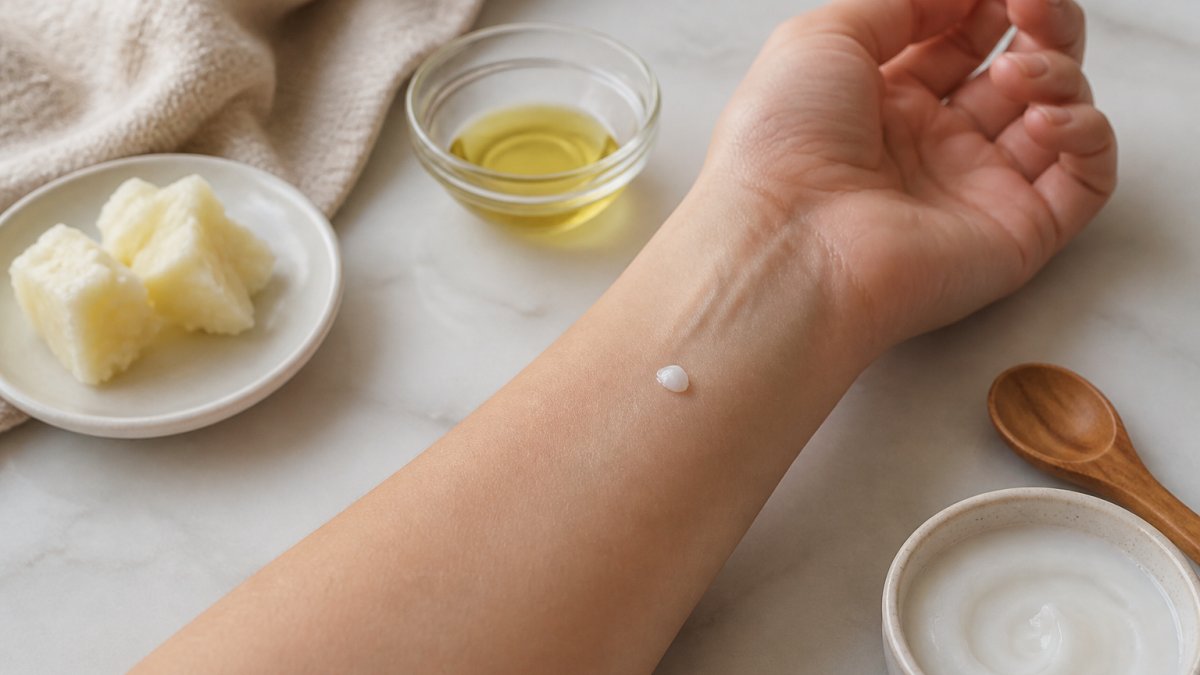
Here is the routine we recommend:
- Choose the spot. The inner forearm or the side of the neck, on clear skin.
- Apply a small amount. A pea-sized dot, rubbed in gently.
- Leave it alone for 24 to 48 hours. Do not wash the area more than usual.
- Watch for stinging, redness, itching, or bumps. Note the timing, not just the presence.
- Repeat on the face with a small patch near the jawline before full application.
- Introduce one new product at a time. If you start three products in a week, you will never know which one caused the reaction.
Stop use if irritation occurs. If a reaction spreads or blisters, seek medical advice.
Comparing Sky and Sol Alternatives: Price, Ingredients, and Finish
Comparing Sky and Sol alternatives comes down to four columns: the active filter, the full inactive ingredient list, the cosmetic finish, and the cost per ounce. A cheap formula you cannot tolerate is the most expensive thing you will buy.
| Product | Active Filter | Notable Inactives | Finish / White Cast | Typical Price | Best For | Watch Out For |
|---|---|---|---|---|---|---|
| Vanicream Facial Moisturizer with SPF 30 | Zinc oxide (non-nano) | Glycerin, no fragrance, no dyes | Light cast, dewy | About $16-$20 for 1.7 oz | Very reactive skin, short ingredient list | Can pill under makeup |
| CeraVe Hydrating Mineral Sunscreen SPF 30 Face | Zinc oxide, titanium dioxide | Ceramides, niacinamide, no fragrance | Moderate cast | About $15-$18 for 2.5 oz | Dry, barrier-compromised skin | Cast is noticeable on deep tones |
| La Roche-Posay Anthelios Mineral Tinted SPF 50 | Titanium dioxide, zinc oxide | Iron oxides for tint, no fragrance | Sheer tint, minimal cast | About $35-$40 for 1.7 oz | Deeper skin tones, cosmetic finish | Tint may not match every undertone |
| Blue Lizard Sensitive Mineral Sunscreen SPF 30+ | Zinc oxide, titanium dioxide | No fragrance, no parabens | Visible cast | About $15-$20 for 5 oz | Body use, value per ounce | Heavy feel on the face |
| Aveeno Baby Continuous Protection Sensitive Skin SPF 50 | Zinc oxide | Oat, no fragrance | Moderate cast | About $12-$15 for 3 oz | Body, families, budget | Thick texture, slower spread |
| EltaMD UV Physical Broad-Spectrum SPF 41 | Zinc oxide, titanium dioxide | Iron oxides, no fragrance | Light tint, low cast | About $40-$45 for 3 oz | Daily face wear, post-procedure skin | Higher cost per ounce |
| Tallow-based balm layered under SPF | None (not a sunscreen) | Tallow, olive oil, beeswax | Soft, non-greasy | Varies | Layering under mineral sunscreen | Not a sunscreen by itself |
A few patterns are worth pulling out of that table:
- Cost per ounce swings widely. Body formulas like Blue Lizard and Aveeno run roughly $3-$5 per ounce; facial formulas like EltaMD and La Roche-Posay run $12-$25 per ounce. At the recommended two milligrams per square centimeter daily, facial products add up fast.
- Non-nano zinc oxide is common but not universal. Vanicream and several others publish non-nano claims; smaller brands often do not. Look for the claim on the label rather than assuming it.
- Tint is the main lever for white cast. Iron oxides in a tinted formula (La Roche-Posay, EltaMD) cut the cast noticeably on medium and deep skin tones, but the tint has to match your undertone or it looks ashy in a different way.
That last row matters. A tallow balm supports the skin barrier and hydrates; it does not replace broad-spectrum SPF. Use it underneath, not instead of, a tested sunscreen.
Common Mistakes to Avoid When Switching Sunscreens
The biggest mistake when switching sunscreens is changing everything at once. New cleanser, new moisturizer, new SPF in the same week, and you have no idea what helped and what caused the flare.
Other traps we see often:
- Trusting "reef-safe" as a safety claim. It speaks to environmental impact, not to whether a formula will irritate your skin.
- Skipping the patch test because the label says "gentle." Gentle is a marketing word, not a clinical result.
- Choosing a spray or gel for convenience. These often contain drying alcohol, which stings compromised skin.
Conclusion
Finding a Sky and Sol alternative that suits eczema-prone skin is a process, not a single purchase. Start with a fragrance-free mineral formula, patch test it properly, and layer it over a barrier-supporting moisturizer.
At Palm Beach Tallow, we make small-batch, hand-crafted skincare from grass-fed and finished tallow, organic olive oil, and beeswax, with simple ingredients and no synthetic preservatives. Our tallow balms provide deep hydration and nourishment.
Frequently Asked Questions
Which sunscreen ingredients should people with eczema-prone skin avoid?
The ingredients most often linked to stinging and skin reactions are fragrance, essential oils, alcohol, and some synthetic preservatives. For sensitive skin, a fragrance-free mineral sunscreen built on zinc oxide is usually the safer starting point. Check the full ingredient list, not just the front label, because 'natural' and 'clean' claims do not guarantee a formula will suit reactive skin. If a product stings on contact or leaves your skin red and itchy, stop using it and speak with a dermatologist about what triggered the reaction.
Can natural skincare products irritate eczema-prone skin?
Yes. Botanical extracts, essential oils, and plant fragrances are common contact allergens, even in products marketed as clean or non-toxic. A short ingredient list is easier to audit, but simple does not automatically mean safe for every person. That is why patch testing matters: apply a small amount to your inner forearm and wait 48 hours before using it on your face or on a child. If redness, itching, or a flare appears, the product is not the right fit regardless of how natural the label sounds.
How do I patch test a new sunscreen or moisturizer?
Wash and dry a small patch of skin on your inner forearm. Apply a pea-sized amount of the product and let it absorb without washing it off. Leave the area uncovered and check it at 24 and 48 hours for redness, itching, stinging, or bumps. If the patch stays calm, test a second small area near your jaw or neck before applying to your full face. Keep a note of the product and the date so you can trace any reaction back to a specific formula.
When should I ask a dermatologist about an eczema flare?
Contact a dermatologist if a flare spreads quickly, oozes, crusts, or feels warm to the touch, or if home care has not calmed it within a week or two. Seek care sooner if you notice signs of infection such as pus, swelling, or fever. A dermatologist can also help you identify which ingredients in your routine are triggering reactions and recommend a sun protection plan that fits your skin. Bring your product labels and a list of what you have tried so the visit is more productive.