
Buy Grass-Fed Tallow Balm Online: A 2026 Guide
Table of Contents
- Why Grass-Fed Tallow Balm Works for Your Skin
- Tallow Balm for Dry Winter Skin: What Makes It Different
- Grass-Fed vs. Grain-Fed Tallow Skincare: Why the Source Matters
- How to Use Tallow Balm for Best Results
- Ingredient Purity and Sourcing Standards That Matter
- Is Tallow Balm Safe for Sensitive and Reactive Skin
- Where to Buy Quality Tallow Balm Online
- Frequently Asked Questions
Last Updated: October 1, 2026
Why Grass-Fed Tallow Balm Works for Your Skin
Your skin is fundamentally made of lipids. When you apply grass-fed tallow balm, you're not fighting your skin's biology, you're working with it. Tallow mirrors the fatty acid composition of healthy human skin, which is why it absorbs so effectively and doesn't sit on the surface like many conventional moisturizers do.

Grass-fed beef tallow contains fat-soluble vitamins, A, D, E, and K, in bioavailable forms your skin can actually use. These aren't added as ingredients; they're naturally present because the cattle ate grass, not grain. Grain-fed tallow lacks this nutrient density. This distinction matters for skin healing, especially for those managing eczema, psoriasis, or chronic dryness.
At Palm Beach Tallow, we've focused on this principle for years: work with your skin's natural chemistry, not against it. That's why every product starts with grass-fed and finished beef tallow as the foundation.
Tallow Balm for Dry Winter Skin: What Makes It Different
Winter dryness stems from cold air stripping the skin's lipid layer and indoor heating depleting deep moisture. Most drugstore moisturizers are water-based and evaporate quickly in dry conditions.
A tallow balm works differently. Because it's an occlusive, a true oil-based barrier, it locks moisture in and prevents transepidermal water loss. Apply it to slightly damp skin and it seals that hydration where it matters most.
The texture matters too. A whipped tallow balm absorbs faster than pure tallow, making it practical for face and body. The whipping process incorporates air, creating a lighter feel while maintaining all the nutrient benefits. If you've avoided tallow because you thought it would feel greasy, the whipped texture changes that equation entirely.

Apply tallow to clean, damp skin, the moisture gives it something to seal in. A small amount warmed between your fingertips spreads further and absorbs more completely than expected.
Grass-Fed vs. Grain-Fed Tallow Skincare: Why the Source Matters
Not all tallow is created equal. The nutritional profile depends entirely on what the animal ate. Grass-fed cattle produce tallow rich in conjugated linoleic acid (CLA), omega-3 fatty acids, and fat-soluble vitamins. Grain-fed cattle produce tallow that's higher in omega-6 and lacks the same nutrient density.
Grass-fed tallow supports skin elasticity and reduces inflammatory responses more effectively than grain-fed tallow.
Here's what to verify when buying: the product should explicitly state "grass-fed and finished." "Grass-fed" alone might mean the cattle grazed early in life but were grain-finished before slaughter. "Grass-fed and finished" means they ate grass through their entire lives. This distinction determines the fatty acid profile and nutrient content.
How to Use Tallow Balm for Best Results
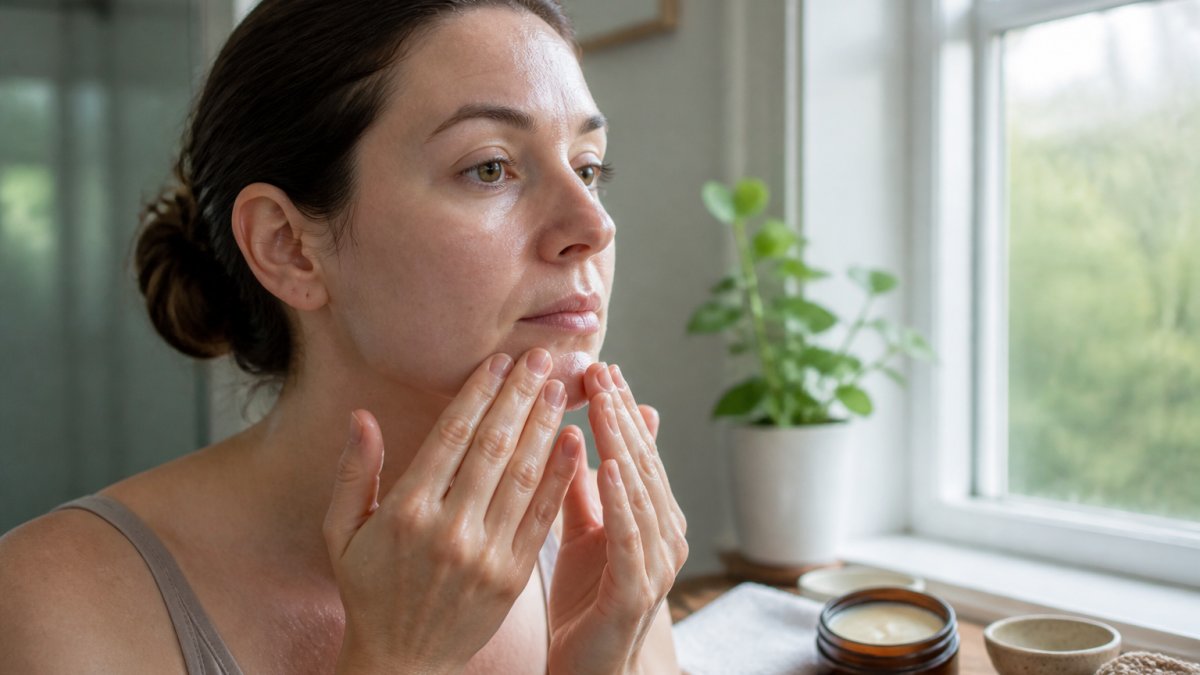
The application method determines how well tallow absorbs. Start with a small amount, roughly the size of a pea for your face. Warm it between your fingertips for 3-5 seconds until it becomes slightly liquid, then smooth it onto clean, damp skin.
Apply immediately after cleansing or after a light mist of water. This gives the balm moisture to seal in; applying to dry skin causes it to sit on the surface longer.
For body use, a small amount covers surprising surface area once warmed. Most people use too much initially but quickly find the right amount through practice.
Apply morning and night for winter dryness, or once daily for normal skin. If skin feels greasy, reduce the amount or apply to damper skin rather than abandoning the product.
Keep containers in your bathroom and by your bed to remove friction from the routine and ensure consistency.
Ingredient Purity and Sourcing Standards That Matter
A quality tallow balm should have a short ingredient list: grass-fed and finished beef tallow, organic olive oil, beeswax, and optional essential oil.
Verifying Grass-Fed Claims Beyond Marketing Language
The phrase "grass-fed" appears on many products, but it's often vague. Here's what actually matters:
- Grass-fed and finished means the cattle ate grass throughout their entire lives. This is the standard you want. "Grass-fed" alone may mean the cattle grazed early but were grain-finished before slaughter, which changes the fatty acid profile significantly.
- Third-party certifications provide verification. Look for American Grassfed Association (AGA) certification, which requires year-round pasture access and prohibits grain supplementation. Products bearing the AGA label have been audited. Similarly, USDA Organic certification for the tallow itself indicates no synthetic pesticides or antibiotics were used.
- Regenerative Organic Certified (ROC) goes further than standard organic, requiring soil health practices and animal welfare standards. This certification is rarer but signals the highest sourcing standards.
- Transparency about cattle origin matters. Reputable brands state the region or ranch where cattle are sourced. If a website is vague about sourcing or uses generic language like "premium grass-fed," that's a red flag. Specific sourcing information, such as "cattle from family farms in the Upper Midwest" or similar detail, indicates the brand has direct relationships with suppliers.
Manufacturing and Batch Testing Standards
Small-batch manufacturing enables quality control that industrial facilities cannot match, preventing inconsistencies in nutrient retention and purity.
Dermatological Testing and Hypoallergenic Certification
Sourcing and Environmental Impact Verification
Is Tallow Balm Safe for Sensitive and Reactive Skin
Tallow balm is generally well-tolerated by sensitive skin because it's simple and mimics skin's natural chemistry, but understanding specific risks and testing compatibility is essential before use.
Grass-Fed Tallow Balm for Dry Skin →
The Comedogenicity Question: Will It Clog Pores?
Identifying Individual Ingredient Sensitivities
The risk with tallow balm lies in individual sensitivities to other ingredients like beeswax, essential oils, or olive oil. With only four to five ingredients, identifying the culprit is straightforward if a reaction occurs.
Patch test by applying a small amount to your inner arm and waiting 24-48 hours for reactions. If clear, apply to a less visible facial area for another 24-48 hours before full-face use.
If you experience a reaction, test the unscented version to isolate whether the essential oil is the culprit.
Tallow Balm for Eczema and Psoriasis
For eczema and psoriasis, tallow balm supports barrier repair without triggering inflammation. Vitamins A and D promote cell turnover, reduce inflammation, and support immune regulation.
Wait until inflammation settles before introducing tallow balm, as even gentle products can irritate compromised skin during active flares.
Distinguishing Tallow from Other "Natural" Skincare
Tallow balm differs from multi-ingredient "natural" products by having fewer potential irritants.
When to Seek Dermatological Guidance
Consult a dermatologist before introducing tallow balm if you have severe eczema, psoriasis, rosacea, or a history of multiple product sensitivities.
Where to Buy Quality Tallow Balm Online
Verify the tallow source, reputable brands clearly state whether it's grass-fed and finished and provide cattle origin information. If vague, move on.
Check the ingredient list. If it has more than five ingredients, the brand is adding unnecessary fillers. Simple is better, it means fewer potential irritants and a clearer picture of what you're applying to your skin.
Look for small-batch production information. Brands that make products in small batches typically maintain higher quality standards than those using industrial manufacturing. Hand-crafted products often have batch numbers and production dates, which indicates proper inventory rotation.
Palm Beach Tallow's Grass-Fed Tallow Balm for Dry Skin ($34.00) is available directly from our site. We use grass-fed and finished beef tallow, organic olive oil, beeswax, and organic sweet orange essential oil, nothing else. Each batch is made in small quantities and tested for consistency. The whipped version ($38.00) offers the same ingredient quality with a lighter texture that many prefer for facial application.
When comparing options online, price alone isn't the deciding factor. A $15 tallow balm from an unknown supplier might contain lower-quality tallow or unnecessary additives. A $35 balm from a brand that sources carefully and manufactures in small batches can deliver better results and represent better value over time.
Read customer reviews, but read them critically. Look for specific feedback about absorption, texture, and results, not just "I loved this." People managing specific skin conditions like eczema or psoriasis often leave detailed reviews that tell you how the product performed for them. If multiple reviewers mention similar results for your condition, that's meaningful information.
Choosing the right tallow balm means understanding what makes grass-fed tallow different, verifying sourcing and ingredient quality, and testing compatibility with your skin before committing.
| Aspect | What to Look For | Why It Matters |
|---|---|---|
| Tallow Source | Grass-fed and finished cattle | Nutrient density and fatty acid profile |
| Ingredient Count | 4-5 simple ingredients | Fewer irritants, better for sensitive skin |
| Manufacturing | Small-batch, hand-crafted | Quality control and freshness |
| Sourcing Transparency | Brand clearly states cattle origin | Ensures consistency and ethical practices |
| Texture Option | Whipped or pure | Whipped absorbs faster; pure is richer |
Frequently Asked Questions
What are the benefits of grass-fed tallow balm for skin?
Grass-fed tallow balm mimics your skin's natural lipid profile, delivering fat-soluble vitamins A, D, E, and K that support skin barrier repair and elasticity. Because it matches your skin biology, it absorbs deeply without clogging pores, making it effective for dry patches, eczema, and aging skin. The nutrient-dense composition also provides antioxidant protection and lasting hydration.
How can you tell if tallow balm is high quality?
Look for balms made from grass-fed and finished beef tallow, not grain-fed. Check that the ingredient list is short and recognizable, ideally just tallow, organic oil, beeswax, and optional essential oils. Verify the brand sources from pasture-raised cattle and uses small-batch methods. Avoid products with synthetic preservatives, fragrance, or fillers.
Is grass-fed tallow balm safe for sensitive skin and eczema?
Grass-fed tallow balm can be suitable for sensitive skin. However, individual reactions vary. If you have severe eczema or psoriasis, start with a patch test on a small area first. Discontinue use if irritation occurs. Many people with reactive skin find tallow gentler than conventional moisturizers because it contains no synthetic chemicals or common irritants.
Does tallow balm clog pores or cause acne?
Quality grass-fed tallow balm's fatty acid profile closely matches your skin's natural sebum. This means it absorbs into the skin rather than sitting on top and blocking pores. Grain-fed or low-quality tallow may behave differently, which is why sourcing matters. If you have acne-prone skin, use a small amount and apply to slightly damp skin to maximize absorption.