
Tallow Balm vs Store Bought Moisturizer: 2026 Guide
Table of Contents
- Tallow Balm vs Store Bought Moisturizer: The Core Difference
- Tallow Balm Ingredients: What Is Actually in the Jar
- Does Tallow Balm Clog Pores? Comedogenicity and Acne Risk
- Moisture Retention, Texture, and Absorption Compared
- Which Skin Type Should Use Which Moisturizer
- How to Use Tallow Balm for Best Results
- Cost, Quality, and Sourcing: What Your Money Buys
- Conclusion: Making the Switch Without Guessing
- Frequently Asked Questions
Last Updated: October 7, 2026
Tallow Balm vs Store Bought Moisturizer: The Core Difference
The core difference between tallow balm and a store bought moisturizer comes down to what carries the water. Tallow balm is water-free and built on animal fat, while conventional moisturizers are water-based emulsions stabilized with preservatives. That gap shapes texture, shelf life, absorption, and who should reach for which.

This guide from Palm Beach Tallow breaks down the tallow balm vs store bought moisturizer question without the marketing gloss: ingredients, pore-clogging risk, moisture retention, skin type matching, and what your money actually buys.
How Tallow Balm Is Made
Tallow balm starts with rendered beef fat, usually from grass-fed and finished cattle, gently heated and filtered into a clean, solid, creamy base. Makers then blend it with oils, waxes, or essential oils to adjust texture and scent.
That is the whole process: no emulsifiers, no water, no preservative system. A simple tallow balm might contain four ingredients total: tallow, olive oil, beeswax, and a light essential oil. With no water in the jar, there is nothing for bacteria to grow in, so no preservatives are needed.
How Conventional Moisturizers Are Formulated
Conventional moisturizers are emulsions: oil droplets suspended in water, held together by emulsifiers. Water is usually the first ingredient, so the formula needs preservatives to stay stable and safe.
These products typically combine humectants that pull water into the skin, emollients that soften, and occlusives that seal moisture in. The result is a lightweight lotion that spreads easily and absorbs fast, with a longer ingredient list that often includes fragrance, fillers, and additives.
Tallow Balm Ingredients: What Is Actually in the Jar
A quality tallow balm contains fat, oil, wax, and sometimes essential oil. The fat itself carries fat-soluble vitamins A, D, E, and K, along with fatty acids that mirror the lipids in your own skin barrier.

That similarity is the main argument for tallow: your skin barrier is built from fats, so a fat-based balm can support it directly. Whether that beats a well-formulated conventional moisturizer is a question the evidence does not fully settle.
Ingredient count matters for reactive skin: fewer ingredients means fewer chances of a reaction. If you have reacted badly to a "natural" product, the culprit was likely a botanical extract or fragrance, not the base.
Does Tallow Balm Clog Pores? Comedogenicity and Acne Risk
Tallow balm can clog pores for some people, particularly on the face. It is a rich, occlusive product, and that film can trap oil and dead skin cells on acne-prone skin.
The comedogenic rating system is a rough guide, not a guarantee: ratings come from rabbit-ear testing, which does not perfectly predict human facial skin. Beef tallow is generally rated moderate, not the worst offender, but not the safest either.
If you are acne-prone, patch test on your jawline for a week before using tallow balm on your whole face.
Moisture Retention, Texture, and Absorption Compared
Most comparisons stop at "balm is thick, lotion is light." The more useful frame is functional: moisturizers work through three mechanisms, and tallow balm and store bought moisturizer lean on them in very different proportions.
- Humectants (glycerin, hyaluronic acid, panthenol, urea) pull water into the upper skin layers. They need water in the formula and, in dry air, water from the environment or from deeper skin.
- Emollients (fatty acids, oils, esters, squalane) soften and smooth by filling gaps between skin cells. They improve feel and flexibility.
- Occlusives (petrolatum, beeswax, lanolin, tallow, dimethicone) sit on the surface and slow transepidermal water loss (TEWL), the passive evaporation of water through skin.
Tallow balm is almost entirely emollient plus occlusive.
Conventional moisturizers are built the other way around: water first, humectants like glycerin in the top five, and occlusives at lower percentages to avoid a greasy finish.
That distinction matters for barrier hydration. If your barrier is compromised, flaking, tightness, stinging, the priority is reducing water loss, and an occlusive-rich balm suits that job.
Texture and absorption follow from the same chemistry. Water-based emulsions spread easily and leave a light residue; a water-free balm stays put, takes minutes to settle, and can feel tacky under makeup.
| Factor | Tallow Balm | Store Bought Moisturizer |
|---|---|---|
| Base | Water-free fat and wax | Water-based emulsion |
| Primary mechanism | Occlusive + emollient | Humectant + emollient + occlusive |
| Adds water to skin | No, relies on damp application | Yes, water is the first ingredient |
| Reduces water loss | Strongly | Moderately, dose-dependent |
| Preservatives | Not needed | Required |
| Texture | Thick, rich balm | Lightweight lotion or cream |
| Absorption | Slow, leaves residue | Fast, sinks in quickly |
| Best for | Dry, rough, compromised skin; overnight or targeted use | Oily skin, daytime layering, dehydrated skin |
A practical test: apply each product to a dry forearm patch and check at two and six hours. Balms typically still feel present at six hours; lotions often need a second application. That is the occlusive effect in action, not a marketing claim.
Grass-Fed Tallow Balm for Dry Skin →
Which Skin Type Should Use Which Moisturizer
Dry and very dry skin gets the most from tallow balm. Sensitive skin often tolerates it well because the ingredient list is short. Eczema-prone skin may find the occlusive layer soothing, though anyone with an active flare or diagnosed condition should talk to a dermatologist first.
Oily and acne-prone skin usually does better with a water-based moisturizer. Combination skin can split the difference: tallow balm on cheeks and body, something lighter on the T-zone.
- Dry skin: tallow balm, morning and night
- Sensitive skin: tallow balm, patch tested first
- Eczema-prone skin: tallow balm as a barrier layer, with medical guidance
- Oily skin: lightweight water-based moisturizer
- Acne-prone skin: non-comedogenic water-based moisturizer
- Combination skin: tallow balm on dry zones only
How to Use Tallow Balm for Best Results
Apply tallow balm to slightly damp skin, using a pea-sized amount warmed between your fingertips. Damp skin helps the balm spread further and lock in existing moisture instead of sitting on the surface.
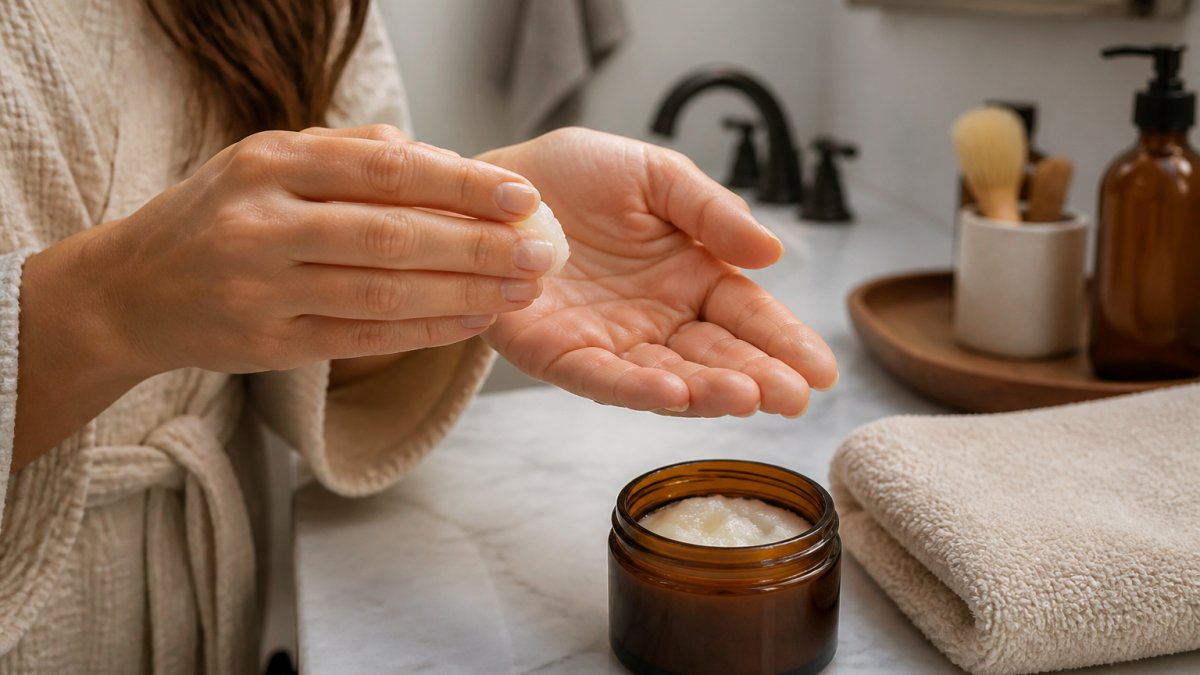
Start with less than you think you need, a heavy facial application takes a long time to settle and can feel greasy under makeup. For the body, apply after a shower while skin is still damp, then pat dry.
A simple routine:
- Cleanse with a gentle, fragrance-free wash
- Pat skin so it is damp, not dripping
- Warm a pea-sized amount between fingertips
- Press and smooth onto skin, starting with the driest areas
- Wait five minutes before applying makeup or sunscreen
Patch test first if your skin is reactive. Apply a small amount behind your ear or on your inner forearm and wait 24 hours.
Cost, Quality, and Sourcing: What Your Money Buys
Price per jar tells you almost nothing. The numbers that matter are cost per ounce and cost per use, and the second depends on how much product each application requires.
Start with cost per ounce: divide price by net weight. A 2-ounce balm at $34.00 is $17.00 per ounce; a 16-ounce drugstore lotion at $12.00 is $0.75 per ounce.
Now adjust for use.
Sourcing drives the price differences inside the tallow category. Check these on any label:
- Fat source and diet. "Grass-fed and finished" means the animal ate grass its whole life, not just at the end. That distinction affects the fatty acid profile and is reflected in cost.
- Rendering method. Small-batch, low-heat rendering preserves more of the fat's natural color and scent. High-heat industrial rendering is cheaper but produces a more neutral, sometimes blander base.
- Ingredient count and order. In a balm, tallow should be the first ingredient. If it appears after several oils and waxes, you are paying a premium for a minor component.
- Added oils and waxes. Olive, jojoba, and beeswax are common and inexpensive. Exotic oils drive price up without a clear functional advantage for most users.
- Fragrance. Essential oils add cost and are a common irritant. Fragrance-free versions are often a better value for reactive skin.
- Packaging and storage. Amber glass and airtight jars protect fats from oxidation. A balm in a wide-mouth jar exposed to air and light will go rancid faster, which erodes value regardless of sticker price.
- Shelf life. Without preservatives, a balm relies on its fat content and packaging for stability. Expect a shorter usable window than a preserved lotion, and store it cool and dark.
To compare two balms: calculate cost per ounce, then check whether tallow is the first ingredient and whether the formula is short.
Our Grass-Fed Tallow Balm for Dry Skin is $34.00 and made with four ingredients: grass-fed and finished beef tallow, organic olive oil, beeswax, and organic sweet orange essential oil.
Conclusion: Making the Switch Without Guessing
The tallow balm vs store bought moisturizer decision is not about which is universally better. It is about matching the formula to your skin. Water-free balms suit dry, rough, and sensitive skin. Water-based lotions suit oily, acne-prone, and combination skin that needs lightweight daily hydration.
If you are curious about tallow, start small and patch test. Palm Beach Tallow makes hand-crafted balms with grass-fed and finished tallow, organic olive oil, and beeswax, rich in vitamins A, D, E, and K, and safe for all ages. Our formulas are simple, recognizable, and free of fillers and preservatives.
Get started with Palm Beach Tallow and give dry, reactive skin the deep, lasting moisture it has been missing.
Frequently Asked Questions
Is tallow balm better than store bought moisturizer for dry skin?
It depends on how dry your skin is and what texture you prefer. Tallow balm is water-free and occlusive, so it seals moisture in rather than adding water the way a water-based cream does. For very dry, cracked, or winter-stressed skin, that sealing effect often lasts longer between applications. For mildly dry skin or humid climates, a lighter conventional moisturizer may feel more comfortable. Many people use a water-based moisturizer first, then layer tallow balm on top to hold that hydration in place.
Does tallow balm clog pores or cause breakouts?
Tallow balm is rich and occlusive, which means it can feel heavy on oily or acne-prone skin. Whether it clogs pores depends on your individual skin, how much you apply, and whether you layer it over other products. If you are acne-prone, patch test on a small area like your jawline for several days before using it on your whole face. Applying a thin layer to damp skin, rather than a thick scoop, reduces the chance of congestion while still supporting your skin barrier.
What are the ingredients in tallow balm and why do they matter?
A simple tallow balm typically contains grass-fed beef tallow plus a carrier oil, beeswax, and sometimes an essential oil for scent. Tallow is rich in fatty acids and vitamins A, D, E, and K, which support the skin barrier. Beeswax adds a protective layer that helps moisture retention. Because these formulas skip water, they also skip the preservatives and fillers that water-based products need. Fewer ingredients means fewer potential irritants, which matters if your skin reacts easily.
How should I use tallow balm if I have sensitive or eczema-prone skin?
Start with a patch test on your inner forearm for 24 to 48 hours before applying it anywhere else. Apply a small amount to clean, slightly damp skin and warm it between your fingertips first so it spreads easily. Avoid the eye area. If you have active eczema flares, open skin, or a diagnosed skin condition, talk to your dermatologist before adding any new product to your routine. Tallow balm can support dry, irritated skin, but it is not a treatment for a medical condition.