
How to Identify Clean Skincare Ingredients (2026 Guide)
Table of Contents
- What "Clean Skincare" Actually Means (And Why It Isn't Standardized)
- How to Read Skincare Ingredient Labels Like a Pro
- Natural vs Synthetic Skincare Ingredients: What the Distinction Really Tells You
- Skincare Ingredients to Avoid (And How to Judge Risk, Not Just Hazard)
- Using a Skincare Ingredient Checker Without Letting It Make the Decision
- A 5-Step Method to Verify "Clean" Claims Yourself
- Frequently Asked Questions
Last Updated: October 17, 2026
What "Clean Skincare" Actually Means (And Why It Isn't Standardized)
Clean skincare is a marketing category, not a regulated one.
The FDA's guidance on cosmetic labeling draws a hard line between cosmetics and drugs but says nothing about "clean," "natural," or "non-toxic." Those words are claims, and claims are only as good as the ingredient list behind them.
Here's what most guides get wrong: they treat "clean" as a checklist of banned ingredients. In practice, a shorter, recognizable list you can actually read tells you more than a long list of certifications ever will.
How to Read Skincare Ingredient Labels Like a Pro
Reading a label well means understanding three things: the naming system, the order of ingredients, and what that order can and cannot tell you. Master those and you can evaluate almost any product in under a minute, no app required.
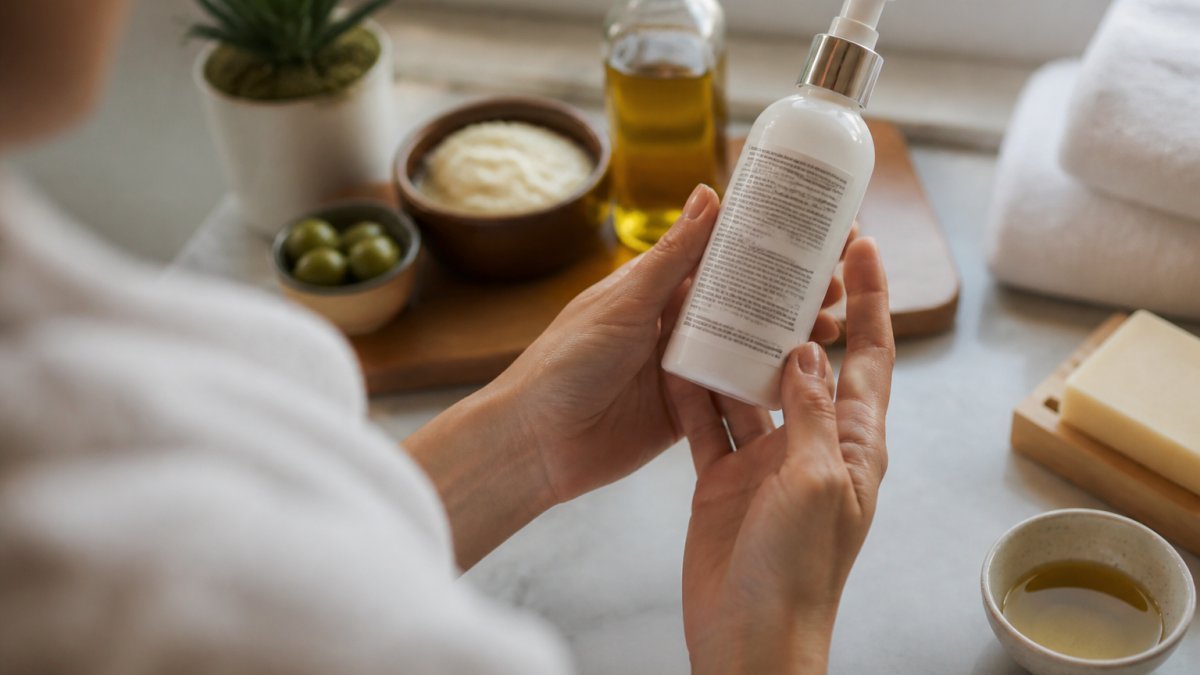
INCI Names, Order, and What Concentration Really Tells You
INCI stands for International Nomenclature of Cosmetic Ingredients, the standardized naming system used on labels so the same substance reads identically across brands.
U.S. labeling rules require ingredients to be listed in descending order of concentration down to 1%, after which brands can list them in any order. That single fact changes how you read a label: the first five ingredients are the bulk of the formula, and everything after the 1% mark may be present in trace amounts.
A Step-by-Step Way to Decode Any Ingredient List
You do not need a database to read a list. Work through it in this order:
- Find the first five ingredients. These set the formula's character. If the first ingredient is water (Aqua), you are looking at an emulsion or a water-based product. If the first is an oil or butter, the product is oil-based. If the first is an alcohol like Alcohol Denat., the product may be drying.
- Identify the function of each of the first five. Most fall into a few families: solvents (water, alcohols), emollients (oils, butters, esters), humectants (glycerin, hyaluronic acid), emulsifiers (cetearyl alcohol, polysorbates), surfactants (cleansers), and preservatives. Knowing the family tells you more than the name does.
- Scan the middle for actives and preservatives. Preservatives such as phenoxyethanol, sodium benzoate, and potassium sorbate usually appear after the 1% mark because they work at low concentrations. Their presence is not a red flag; a water-containing product without any preservative is the bigger concern.
- Read the tail for fragrance and botanicals. Fragrance (Parfum), essential oils, and plant extracts are frequently listed last. That does not make them irrelevant, allergens can trigger reactions at very low levels, but it does tell you they are not the bulk of the formula.
- Match the list to the claim. If the front label says "fragrance-free," the back should not list Parfum or an essential oil. If it says "vegan," look for beeswax, honey, or lanolin. The list is the fact-check.
What the Order Cannot Tell You
Ingredient order is a concentration map, not a safety score. It cannot tell you the exact percentage of anything below 1%, the purity of a raw material, or how your skin will respond. It also cannot tell you whether two ingredients interact. Treat the list as the starting point for judgment, not the verdict.
Natural vs Synthetic Skincare Ingredients: What the Distinction Really Tells You
Natural versus synthetic is a useful distinction, but it is not a safety verdict. Nature produces some of the most irritating substances known (poison ivy is natural), and laboratories produce some of the best-tolerated ones.
A common mistake is assuming "natural" means "gentle." Essential oils are natural and are among the most frequent causes of contact dermatitis. Conversely, a well-formulated synthetic humectant can be gentler than a botanical extract.
Skincare Ingredients to Avoid (And How to Judge Risk, Not Just Hazard)
The most important distinction in ingredient safety is between hazard and risk. Hazard is an ingredient's potential to cause harm; risk is that potential combined with how much you are actually exposed to, how often, and on what part of the body.
Ingredients many people choose to avoid include parabens, sulfates, silicones, drying alcohols, fragrance, and, for some, hydroquinone. That does not mean each is dangerous for everyone. It means the evidence or personal experience warrants caution, especially for sensitive skin.
Fragrance, Essential Oils, and Sensitive Skin
Fragrance is the most common cause of cosmetic contact allergy, and "fragrance" on a label can hide dozens of undeclared compounds. Essential oils like sweet orange, lavender, and peppermint are natural but still contain allergens such as limonene and linalool. For sensitive or eczema-prone skin, fragrance-free formulas are usually the safer starting point. Our tallow balms use a light sweet orange essential oil, and we say so plainly so you can decide for yourself.
Using a Skincare Ingredient Checker Without Letting It Make the Decision
An ingredient checker is a database tool that scans a product's ingredient list or barcode and flags ingredients against a hazard or safety score. It is a fast way to spot something you want to investigate, and a poor substitute for judgment. The trick is knowing what the score actually represents.
How Ingredient Ratings Are Built
Most checkers work from a hazard-based framework. They assign each ingredient a score based on published toxicity data, regulatory restrictions, and allergen listings, then aggregate those scores into a product rating.
Grass-Fed Tallow Balm for Dry Skin →
That design has consequences. A hazard score reflects an ingredient's potential to cause harm under some conditions, not the likelihood it will harm you in this product, at this concentration, applied this way.
Hazard Versus Risk: The Distinction That Changes Everything
Hazard is an ingredient's potential to cause harm. Risk is that potential combined with how much you are actually exposed to, how often, and on what part of the body. A hazard rating on an app is not a risk assessment for your skin.
Four factors move an ingredient from hazard to real-world risk:
- Dose and concentration. The dose makes the poison. An ingredient at 0.1% is not the same exposure as the same ingredient at 10%.
- Route and site. A rinse-off cleanser contacts skin for seconds; a leave-on balm stays for hours. The face and eyelids are more permeable than the arms and legs.
- Frequency. Daily use over years is a different exposure profile than occasional use.
- Individual tolerance. Skin barrier health, allergies, and sensitivities vary widely. A product that suits one person can irritate another.
How to Use a Checker Without Outsourcing Your Judgment
Use a checker as a research assistant, not an oracle:
- Scan for flags, then read the ingredient. If a tool highlights something, look up its function and the concentration context on the label.
- Check whether the score is hazard-based or risk-based. If the tool does not say, assume hazard-based and treat the score as a prompt, not a verdict.
- Cross-check the product against the label. Tools can miss reformulations or misread a barcode. The label is the source of truth.
- Weigh the flag against your own skin. A flagged ingredient you have used for years without issue is different from one you have never tried.
- Patch-test anything new. Apply a small amount to your inner forearm and wait 24 to 48 hours before using it on your face.
These tools have real limits. Most score hazard, not your personal risk. They rarely account for concentration or how a product is used. They can flag benign ingredients and miss problematic combinations. Use one to start a conversation, then read the actual label and weigh it against your own skin.
A 5-Step Method to Verify "Clean" Claims Yourself
You can verify a "clean" claim without trusting a single app. Work through these steps in order:
- Read the full ingredient list, not the front of the package. The front is marketing; the back is the formula.
- Check the first five ingredients. They are the bulk of what you are putting on your skin.
- Flag your personal triggers. Note fragrance, essential oils, or specific allergens you know bother you.
- Cross-check the claim against a database. Use a checker to spot ingredients worth researching, then verify the ingredient's function yourself.
- Patch-test before committing. Apply a small amount to your inner forearm and wait 24 to 48 hours.
Claims like "non-toxic" and "clean" are not verified by any certification body, so the ingredient list is your only real evidence. A short, recognizable list you can read out loud is the most honest claim a product can make.
Reading labels is a skill, and it gets easier with practice. If you want a starting point you can actually read, our Grass-Fed Tallow Balm is made with four simple ingredients: grass-fed beef tallow, organic olive oil, beeswax, and organic sweet orange essential oil. It is gentle enough for sensitive skin and the whole family, and it delivers the deep hydration dry skin needs.

Frequently Asked Questions
What does "clean skincare" actually mean?
There is no legal or industry-wide definition of clean skincare in the US. Brands use the term to mean different things, from avoiding certain ingredient groups to using only plant-derived materials. Because the word is a marketing claim rather than a regulated standard, the only reliable way to judge a product is to read its ingredient list and check any third-party certifications it carries. Treat "clean" as a starting point for questions, not as proof of safety.
How do I read a skincare ingredient list?
Ingredients are listed by weight in descending order until you reach 1%, after which order is flexible. The first five ingredients usually make up most of the formula, so start there. Learn the INCI names for common ingredients so you recognize them, and note where actives and preservatives sit. If a brand highlights an ingredient near the end of the list, it is likely present in a small amount. Reading labels consistently is the fastest way to compare products fairly.
Are natural skincare ingredients always safer?
No. Natural and synthetic describe origin, not safety. Essential oils, botanical extracts, and plant-derived fragrances are common causes of allergic contact dermatitis, while many synthetic ingredients are well studied and gentle. What matters is concentration, how the ingredient is used, and your own skin type. Someone with sensitive skin or eczema may react to a natural essential oil just as easily as to a synthetic preservative. Judge each ingredient on evidence, not on its source.
How accurate are skincare ingredient checker apps?
Checker apps are useful shortcuts, but their scores reflect the database's own criteria, not a universal safety rating. Many rely on hazard classifications that do not account for dose, exposure, or how a product is used, so a low score does not automatically mean a product is unsafe. Use a checker to flag ingredients worth researching, then verify the ingredient's function and concentration on the label. No app replaces reading the list yourself.
What skincare ingredients should I avoid if I have sensitive skin?
Common triggers include added fragrance, essential oils like citrus and lavender, drying alcohols, and strong exfoliating acids used too often. Sulfates can strip skin, and some preservatives cause reactions in reactive skin. Patch test any new product on a small area for a few days before applying it broadly. If you have eczema or psoriasis, keep the formula short and check with a dermatologist before adding actives like retinol or salicylic acid.
Is there a website that can check products for toxic ingredients?
Several ingredient databases and checker tools let you search a product or paste an ingredient list to see how each component is classified. They are helpful for spotting names you do not recognize, but their ratings vary widely and often reflect hazard rather than real-world risk. Cross-check anything alarming against the label and the concentration. A checker is a research aid, not a verdict, so treat its score as one input among several.