
How to Choose Reef Safe Mineral Sunscreen
Table of Contents
- What Makes a Sunscreen Reef Safe
- Ingredients to Avoid in Sunscreen for Reefs
- Understanding Non-Nano Zinc Oxide Sunscreen Benefits
- Reef Safe Sunscreen No White Cast: Finding the Right Formula
- How to Read Sunscreen Labels for Reef Safety
- Application Techniques for Mineral Sunscreens
- Choosing Reef Safe Sunscreen for Your Family
- Frequently Asked Questions
Last Updated: September 20, 2026
What Makes a Sunscreen Reef Safe
A reef safe mineral sunscreen is formulated without ingredients that damage coral ecosystems and marine life. The key distinction is the active ingredient: reef-safe products use mineral filters like non-nano zinc oxide or titanium dioxide instead of chemical absorbers that leach into ocean water and cause coral bleaching.
When you apply sunscreen in the ocean, some of it inevitably washes off into the water. Chemical sunscreen ingredients like oxybenzone and octinoxate accumulate in coral tissue, disrupting reproduction and triggering bleaching even at low concentrations (pubmed.ncbi.nlm.nih.gov). Mineral sunscreens sit on top of your skin, reflecting UV rays without dissolving into seawater. This fundamental difference makes reef-safe mineral sunscreen the responsible choice for anyone who swims in natural waters.
The distinction matters because coral reefs support roughly 25% of all marine species despite covering less than 1% of the ocean floor. When reefs bleach and die, entire ecosystems collapse. Choosing reef-safe mineral sunscreen is one of the few direct actions an individual can take to protect these ecosystems while still defending their own skin.
Ingredients to Avoid in Sunscreen for Reefs
Certain chemical UV filters are particularly damaging to coral. Oxybenzone and octinoxate are the two most harmful, they're so destructive that Hawaii, the U.S. Virgin Islands, and several other jurisdictions have banned them outright. These chemicals cause coral bleaching by interfering with reproduction and damaging the symbiotic algae that give corals their color and energy.
Beyond those two, other chemical absorbers like avobenzone, octocrylene, and homosalate also accumulate in marine environments and stress coral health. The problem isn't that they're slightly harmful, they're bioaccumulative, meaning they concentrate in coral tissue over time and cause damage at levels far below what would affect human skin.
Physical blockers like non-nano zinc oxide and titanium dioxide don't dissolve into water. They remain on your skin and clothing, then rinse off harmlessly. This is why they're the foundation of any truly reef-safe formula.
When reading labels, look for the word "nano" in the ingredient list. Non-nano particles are larger and don't penetrate skin or marine organisms. Nano formulations were developed to reduce the white cast, but they're problematic for ocean health because smaller particles can enter marine life at the cellular level.
Understanding Non-Nano Zinc Oxide Sunscreen Benefits
Non-nano zinc oxide is the gold standard for reef safe mineral sunscreen. It provides broad-spectrum UV protection, blocking both UVA and UVB rays, without the environmental toxicity of chemical filters. The particles are large enough to stay on your skin's surface, reflecting and scattering UV radiation like tiny mirrors.
The advantage of non-nano formulations is straightforward: they don't penetrate skin deeply, and they don't dissolve into seawater. When you rinse off after swimming, the zinc oxide particles wash away without harming marine life. Studies on marine ecotoxicology consistently show that non-nano mineral filters have negligible impact on coral and fish populations, even in high-use reef areas.
The trade-off is texture. Non-nano zinc oxide is thicker and grittier than nano versions, which is why many commercial sunscreens switched to nano particles, they blend more smoothly. However, this smoothness comes at the cost of environmental impact and potentially deeper skin penetration, which some dermatologists find concerning for long-term use.
A reef-safe mineral sunscreen with non-nano zinc oxide will feel different from what you're used to. It's denser, requires more rubbing to blend, and may leave a slight white cast depending on the formulation. This is the honest trade-off: better ocean protection in exchange for a less cosmetically elegant product.
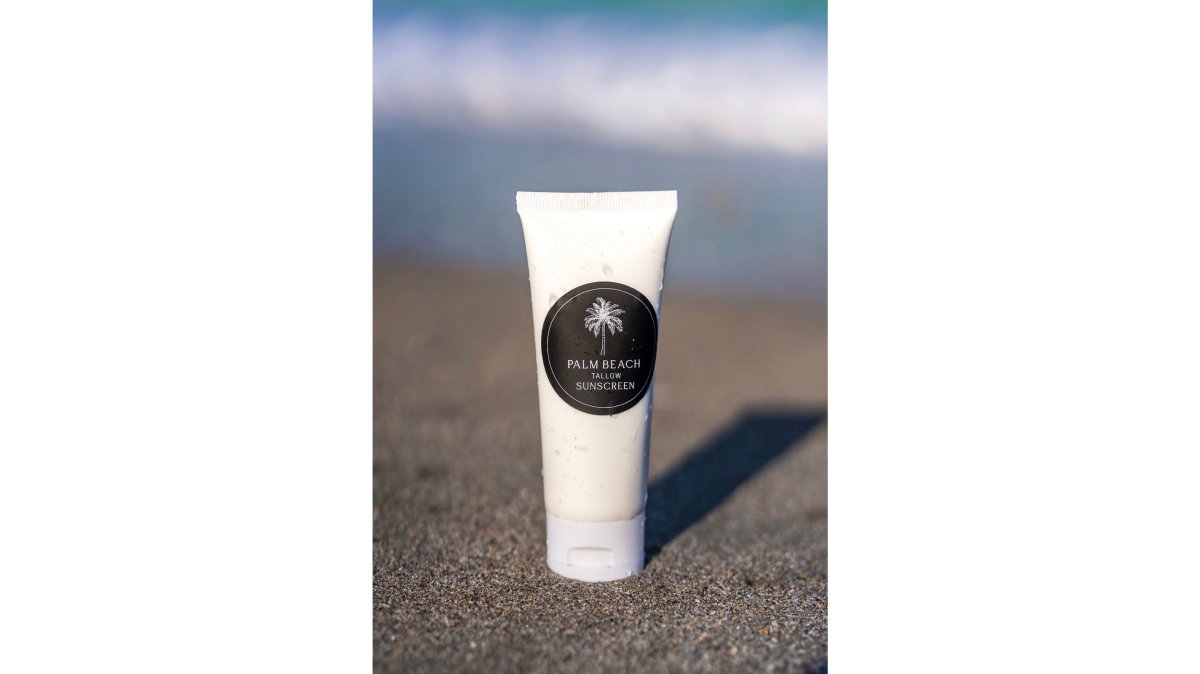
Palm Beach Tallow's Tallow Sunscreen uses non-nano zinc oxide combined with grass-fed tallow and beeswax to create a formula that nourishes skin while protecting it. The tallow provides deep hydration that many mineral sunscreens lack, so your skin doesn't feel dry or tight after application.

Reef Safe Sunscreen No White Cast: Finding the Right Formula
The white cast is the most common complaint about mineral sunscreens. Non-nano zinc oxide and titanium dioxide are opaque, so they naturally leave a visible residue on skin. This white appearance is actually proof that the mineral filter is doing its job, it's sitting on your skin, ready to deflect UV rays.
Reducing white cast without sacrificing reef safety requires strategic formulation. The best approaches use a combination of techniques: smaller non-nano particles (still large enough to be safe, but optimized for blending), light-reflecting oils that help particles distribute evenly, and tints that neutralize the white appearance.
Some reef-safe formulas add iron oxides, natural colorants, to match different skin tones. This is effective and safe. Others use silica or talc to help particles blend, though talc has separate safety concerns unrelated to reef protection. The most elegant solutions use nourishing oils like coconut oil and plant-based emollients that help the mineral particles spread without clumping.
Application technique matters enormously for white cast. Most people don't apply enough product or don't blend it thoroughly. A proper application requires patience: use a generous amount, warm it between your palms, and massage it into your skin in circular motions for 30-60 seconds. This allows the particles to distribute evenly and reduces visible white cast significantly.
The honest truth: even the best reef-safe mineral sunscreen will show some white cast compared to chemical sunscreens. If a zero-white-cast mineral formula exists, it's either using nano particles (environmental risk) or it's not actually providing adequate UV protection. Accepting a slight white cast is part of choosing genuine reef safety.
How to Read Sunscreen Labels for Reef Safety
Start with the active ingredients section, this is where the UV filters are listed. Look for non-nano zinc oxide or non-nano titanium dioxide as the primary active ingredients. The word "non-nano" must appear explicitly on the label or in the ingredient list. If you see only "zinc oxide" without the "non-nano" modifier, contact the manufacturer to confirm.
Check the inactive ingredients for chemical filters that shouldn't be there: avoid oxybenzone, octinoxate, avobenzone, octocrylene, and homosalate. These are sometimes listed under their INCI (International Nomenclature of Cosmetic Ingredients) names, so familiarize yourself with both common and scientific names.
Look for broad-spectrum protection and an SPF of at least 30. Broad-spectrum means the product protects against both UVA and UVB radiation. SPF 30 blocks 97% of UVB rays; SPF 50 blocks 98%. The difference is minimal, so SPF 30 is sufficient for most daily use. Higher SPF numbers don't justify thicker, greasier formulations.
Water resistance claims should specify duration: "water resistant 80 minutes" means the product maintains its SPF rating after 80 minutes in water. Reef-safe mineral sunscreen typically maintains water resistance for 40-80 minutes. After that, you need to reapply, especially if you've been swimming or sweating.
The ingredient list order matters. Ingredients are listed by concentration, highest first. If non-nano zinc oxide is listed first or second, you're getting a meaningful amount of mineral protection. If it's listed fifth or later, the formula is diluted and may not provide adequate coverage.
Application Techniques for Mineral Sunscreens
Mineral sunscreen requires a different application approach than chemical formulas. Because the particles don't dissolve into your skin, they need to be distributed evenly across your entire body to provide consistent protection.
Use more product than you think you need. The recommended amount is one ounce (about a shot glass full) for your entire body, or a nickel-sized amount for your face.
| Application Step | Duration | Frequency |
|---|---|---|
| Initial application | 2-3 minutes | Before sun exposure |
| Reapplication after swimming | 2-3 minutes | Immediately after water exposure |
| Reapplication in sun | 2-3 minutes | Every 2 hours |
| Touch-up on face | 30-60 seconds | As needed for white cast |
Choosing Reef Safe Sunscreen for Your Family
Family sunscreen selection requires balancing protection, safety, and practicality. Reef-safe mineral sunscreen works for all ages, infants over 6 months, children, teenagers, and adults can all use the same formula, though application amounts vary by body size.
Frequently Asked Questions
What ingredients should I avoid in sunscreen to protect coral reefs?
Oxybenzone and octinoxate are the primary ingredients that harm coral reefs by causing bleaching and damaging marine ecosystems. These chemical filters accumulate in ocean water and break down corals' symbiotic relationships with zooxanthellae algae. Many reef-safe mineral sunscreens use non-nano zinc oxide or titanium dioxide instead, which sit on the skin's surface without penetrating the water or bioaccumulating in marine life. Always check the active ingredients label to ensure these harmful chemicals are absent.
Is there a difference between mineral and chemical sunscreens for reef health?
Yes. Mineral sunscreens use physical UV blockers like zinc oxide and titanium dioxide that reflect UV rays without dissolving into water. Chemical sunscreens contain organic compounds that absorb UV energy and can leach into oceans, where they accumulate in marine organisms and damage coral bleaching resistance. Mineral sunscreens are inherently reef-safe when formulated with non-nano particles, making them the better choice for ocean-conscious families. Mineral formulas also tend to be gentler on sensitive skin and safe for all ages.
How do I find a mineral sunscreen that doesn't leave a white cast?
Modern reef safe mineral sunscreens blend non-nano zinc oxide with ingredients like coconut oil, beeswax, and tallow to improve spreadability and reduce visible residue. Apply the sunscreen in thin, even layers and rub thoroughly into your skin using circular motions rather than dabbing. Formulas made with grass-fed tallow and organic oils absorb better and blend more seamlessly than older mineral sunscreens. If white cast persists, use a light touch and allow the product to set for a minute before dressing.
Can one reef-safe sunscreen work for my whole family, from toddlers to teenagers?
Yes. Mineral sunscreens with non-nano zinc oxide are safe for all ages, including infants over 6 months old, and effective for all skin types. Grass-fed tallow formulas provide additional hydration and vitamin-rich nourishment that benefits sensitive, acne-prone, and dry skin alike. The physical UV-blocking mechanism doesn't change based on age or skin condition, so one reef-safe mineral sunscreen can protect your entire family while supporting skin health across different needs.