
How to Choose Non Toxic Skincare for Babies
Table of Contents
- Why Baby Skin Needs a Different Approach
- How to Read Baby Skincare Ingredient Labels
- Harmful Chemicals to Avoid in Baby Products
- How to Treat Baby Eczema Naturally
- What to Look for in Non Toxic Skincare for Babies
- Budget-Friendly Non-Toxic Alternatives and DIY Safety
- Non Toxic Skincare for Babies: Environmental Impact and Packaging
- Conclusion
- Frequently Asked Questions
Last Updated: September 14, 2026
Why Baby Skin Needs a Different Approach
Baby skin is roughly 30% thinner than adult skin, and its protective barrier stays underdeveloped for the first year of life (pubmed.ncbi.nlm.nih.gov). That means anything applied to it absorbs faster and irritates more easily. This guide from Palm Beach Tallow walks through how to choose non toxic skincare for babies without relying on marketing claims.
The stakes are higher than most parents realize. A newborn's skin is still building its acid mantle, the slightly acidic film that blocks bacteria and moisture loss. Harsh chemicals, synthetic dyes, and heavy preservatives can disrupt that process. So the question isn't whether to be careful, it's which ingredients actually deserve the caution.
Below, we'll show you exactly how to read a label and which chemicals to avoid.
How to Read Baby Skincare Ingredient Labels
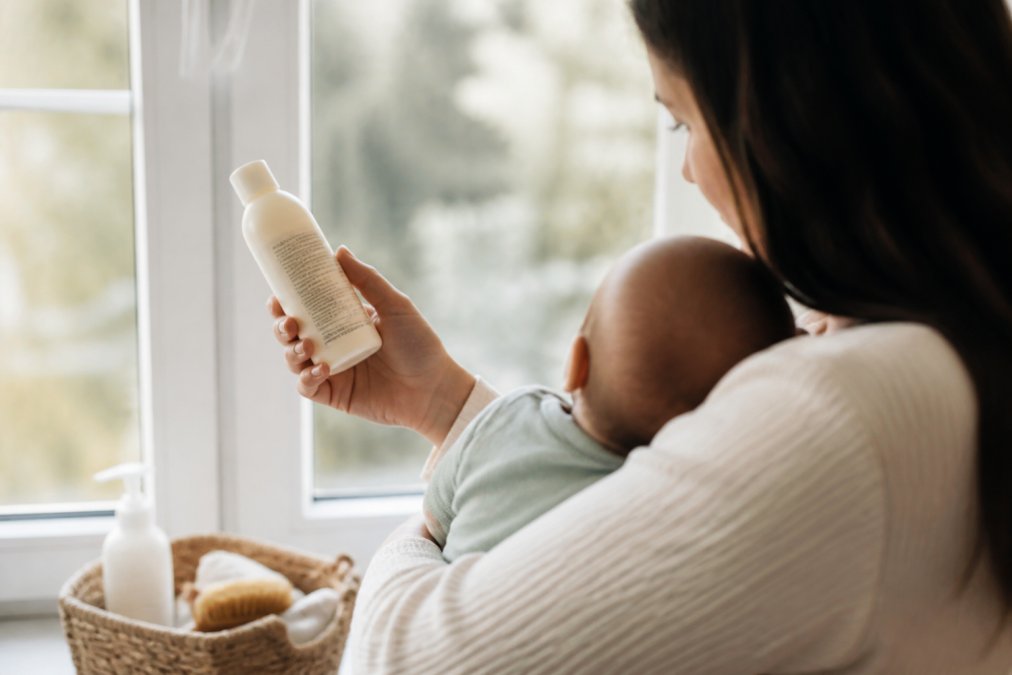
Start at the back of the bottle, not the front. Front-of-pack words like "natural" and "gentle" carry no legal definition in the United States, so the ingredient list is the only part a manufacturer can't fudge.
Read in this order:
- First five ingredients: These make up the bulk of the formula. If petrolatum, mineral oil, or synthetic fragrance appear here, the product is mostly those things.
- Preservatives: Look for phenoxyethanol, methylparaben, and propylparaben. Some preservation is necessary to prevent mold, but paraben-free formulas exist.
- Fragrance and "parfum": One word can hide dozens of undisclosed compounds.
- Dyes: Anything listed as FD&C or D&C followed by a color and number is a synthetic dye.
Terms That Sound Safe but Aren't Regulated
"Hypoallergenic," "dermatologist-tested," and "pediatrician-approved" are marketing terms, not safety standards. No U.S. agency verifies them before a product hits shelves. A brand can print "hypoallergenic" on a lotion containing fragrance and still be technically accurate, because there's no test behind the word.
The FDA guidance on cosmetic labeling confirms that these terms have no formal regulatory definition. Treat them as claims to verify, not promises to trust.
Harmful Chemicals to Avoid in Baby Products
The short list of harmful chemicals to avoid in baby products includes synthetic fragrance, parabens, phthalates, petrolatum, mineral oil, synthetic dyes, and sulfates. Here is what each actually does and where it hides.
Synthetic fragrance and "parfum." A single fragrance entry can represent a blend of dozens of undisclosed compounds, and phthalates are frequently used as fixatives inside that blend. Because fragrance is treated as a trade secret, manufacturers are not required to itemize what is inside it.
Parabens (methylparaben, propylparaben, butylparaben). These are preservatives that prevent mold and bacteria growth. The practical trade-off: a paraben-free formula still needs some preservation system, so look for phenoxyethanol, sodium benzoate, or potassium sorbate as the replacement rather than assuming "preservative-free" is safer. A water-based lotion with no preservative at all is a bacterial risk.
Phthalates (often listed as DEP, DBP, or hidden inside fragrance). These are plasticizers and fragrance carriers. They are rarely printed on a label by name, which is why "fragrance-free" is a more reliable filter than scanning for the word phthalate.
Petrolatum and mineral oil. These are occlusives refined from petroleum. Cosmetic-grade petrolatum is purified, but the concern is mechanical rather than toxic: a heavy occlusive seals the skin surface and can trap bacteria and sweat against thin baby skin if it is not fully clean.
Synthetic dyes (FD&C and D&C colors). Anything listed as FD&C or D&C followed by a color and number is a synthetic dye. These add no skincare benefit and are a known irritant for sensitive skin. They appear most often in bubble baths, colored lotions, and "fun" kids' products.
Sulfates (sodium lauryl sulfate, sodium laureth sulfate). These are surfactants that create lather. A wash that does not foam heavily is usually the gentler choice.
The Fragrance-Free vs. Unscented Trap
Fragrance-free means no scent was added. Unscented often means a masking fragrance was added to cover the smell of other ingredients. That distinction matters for a baby with sensitive skin, because the masking agent can trigger the same reaction the parent was trying to avoid.
If your child has reacted to "unscented" products before, check the ingredient list for "fragrance" or "parfum" anyway. It shows up more often than the label suggests.
How to Treat Baby Eczema Naturally
The core of treating baby eczema naturally is barrier repair. The goal is to seal moisture in and keep irritants out, using short lukewarm baths, fragrance-free cleansers, and a thick moisturizer applied within three minutes of patting dry.
A common mistake is over-washing. Daily soap strips the barrier further.
When It's a Skin Condition, Not a Toxic Reaction
Not every red patch is a reaction to a product. If a rash appears within hours of a new product, stop using it and note the timing. If it persists for weeks regardless of what you use, that points toward a skin condition that a pediatrician should evaluate.
A American Academy of Dermatology resource on childhood eczema notes that eczema often runs in families with asthma or allergies, which is a clue that genetics, not a single product, is driving the flare.
What to Look for in Non Toxic Skincare for Babies
The best non toxic skincare for babies uses a short ingredient list, avoids fragrance and dyes, and relies on recognizable moisturizers like tallow, beeswax, and plant oils. Fewer ingredients mean fewer chances for a reaction, and recognizable ones mean you can actually verify what you're putting on your child.
Look for:
- A short list: Under ten ingredients is a good target.
- Real moisturizers: Grass-fed tallow, organic olive oil, and beeswax all mimic skin's own lipids.
- No fragrance, no dyes, no parabens, no phthalates.
- pH-balanced formulas that won't strip the acid mantle.
This is where a product like Tallow Balm fits. It's built from grass-fed and finished beef tallow, organic olive oil, and beeswax, with no synthetic fragrance or dyes. The ingredient list is short enough to read in one pass, and the tallow is rich in vitamins A, D, E, and K, which support skin cell regeneration. For a baby with sensitive skin, that combination of deep hydration and simple ingredients is the point.

Third-Party Certifications That Actually Matter
Certifications only help if a neutral party verified them. Look for USDA Organic, EWG Verified, or the Leaping Bunny mark, all of which require documentation. A brand's own "clean" seal means nothing without an outside auditor behind it.
Budget-Friendly Non-Toxic Alternatives and DIY Safety
You do not need to spend a fortune to avoid harmful chemicals.
The multi-use math. A single fragrance-free balm or ointment often replaces three or four separate drugstore products: a lotion, a diaper cream, an eczema cream, and a lip balm. When one jar does the work of four, the per-ounce cost drops even if the jar itself costs more than a single drugstore lotion. Fewer products also means fewer ingredient lists to vet and fewer chances of a reaction.
What to look for at the drugstore. National drugstore chains and big-box retailers carry fragrance-free, dye-free options in the same aisle as the premium brands. The reliable filters are the same ones that work everywhere: a short ingredient list, no "fragrance" or "parfum," no FD&C or D&C colors, and a recognizable moisturizer near the top of the list. Store-brand petroleum jelly and plain fragrance-free ointments are among the least expensive safe options for barrier protection.
Where the money actually goes. Premium pricing in this category usually reflects sourcing (grass-fed, organic, single-origin) and packaging. A $30 balm and a $10 fragrance-free ointment can both be free of the chemicals on the avoid list. The difference is what is in them and how they feel.
DIY vs. Store-Bought: The Safety Rules That Matter
Homemade baby skincare is where well-meaning parents get into trouble.
- Water-based DIY lotions are the high-risk category. Any recipe that combines water, aloe, hydrosol, or milk with oil needs a preservative system, or it can grow bacteria and mold within days. Refrigeration slows this but does not stop it.
- Oil-based balms are the safer DIY category. A blend of tallow, beeswax, and a carrier oil contains no water, so there is nothing for bacteria to grow in. The trade-off is texture: get the wax-to-oil ratio wrong and you end up with something too hard to spread or too thin to protect.
- Shelf life is shorter than you think. Even oil-based DIY balms can go rancid, especially if made with fragile oils. Make small batches, store them cool and dark, and discard anything that smells off.
- Sterilize your tools and containers. Jars, spoons, and bowls should be washed and fully dried before use. A dirty jar contaminates an otherwise safe balm.
| Option | Upfront Cost | Safety Risk | Best For |
|---|---|---|---|
| Single multi-use balm | Moderate | Low | Most families, all ages |
| Drugstore fragrance-free ointment | Low | Low | Barrier protection on a budget |
| Drugstore "natural" lotion | Low | Medium | Short-term use |
| DIY oil balm | Low | Medium | Confident makers |
| DIY water-based lotion | Low | High | Not recommended |
If you want the safety of a clean formula without the guesswork, Whipped Tallow Balm is lighter than the classic balm and spreads like a body lotion, which makes it easier to use on a squirming infant. Same clean base, easier application.

Non Toxic Skincare for Babies: Environmental Impact and Packaging
The environmental side of non toxic skincare for babies rarely gets attention, but it matters. Reef-friendly sunscreen ingredients and biodegradable formulas keep chemicals out of waterways, and refillable or recyclable packaging cuts plastic waste that ends up in oceans.
Look for brands that use glass, aluminum, or refillable containers and that avoid oxybenzone and octinoxate in sun protection. Those two sunscreen chemicals are the ones most often flagged for coral damage. Packaging choices are a smaller lever than ingredient choices, but they add up over years of daily use.
Conclusion
Choosing non toxic skincare for babies comes down to reading labels carefully, avoiding fragrance and synthetic dyes, and picking short ingredient lists you can actually verify. It's not about chasing every "clean" claim on the shelf, it's about knowing which ones hold up.
Palm Beach Tallow makes that decision simpler. Our balms are built from grass-fed and finished tallow, organic olive oil, and beeswax, with no synthetic fragrance or dyes, and they're safe for all ages. The formulas support skin cell regeneration, soothe dryness, and calm irritation while staying reef-friendly. Get started with Palm Beach Tallow and give your family skincare you can read in one pass.
Frequently Asked Questions
What ingredients should be avoided in baby skincare products?
Avoid parabens, phthalates, synthetic fragrances, sulfates, mineral oil, petrolatum, and synthetic dyes. These can disrupt the skin barrier or trigger reactions in infants. Look for short ingredient lists with recognizable names like tallow, olive oil, beeswax, and shea butter. Fragrance-free formulas are safer than unscented ones, since unscented products may still contain masking fragrances. If a label lists 'fragrance' or 'parfum' without specifying the source, treat it as a potential irritant for your baby's sensitive skin.
How do I verify if a baby skincare product is truly non toxic?
Check for third-party testing certifications like EWG Verified or USDA Organic. Look for full ingredient transparency on the brand's website, not just the bottle. Avoid products that list 'fragrance' or 'natural flavor' without explaining what those terms include.
How does tallow compare to synthetic moisturizers for infant eczema?
Tallow is rich in vitamins A, D, E, and K and closely matches the lipids in human skin, so it absorbs without disrupting the skin barrier. For eczema-prone babies, tallow balms can soothe dryness and calm irritation while providing deep hydration.
Are natural ingredients always safer for baby skin?
No. Natural ingredients like essential oils, botanical extracts, and plant proteins can trigger allergic reactions in babies. Poison ivy is natural, after all. The key is which natural ingredients and at what concentration. Single-ingredient or short-list formulas with ingredients like grass-fed tallow, organic olive oil, and beeswax are generally well tolerated. But 'natural' on a label is not regulated, so always read the full ingredient list rather than trusting front-of-pack claims about non toxic skincare.
What is the difference between fragrance-free and unscented for babies?
Fragrance-free means no fragrance ingredients were added at any point. Unscented means the product may contain masking fragrances to cover the smell of raw ingredients, but the final product has no noticeable scent. For babies, fragrance-free is the safer choice. Even 'natural' fragrances like essential oils can irritate sensitive skin. If you see 'unscented' on a baby product, check the ingredient list for 'fragrance' or 'parfum' before buying.
What certifications should I look for on baby skincare labels?
Look for EWG Verified, which screens for ingredients of concern and requires full transparency. USDA Organic certifies agricultural ingredients. These certifications are not all equal, but they signal that a third party reviewed the product. No certification replaces reading the ingredient list yourself. A product can be certified organic and still contain an essential oil your baby reacts to.